About
About Contact
Why Iran's Kharg Island was targeted
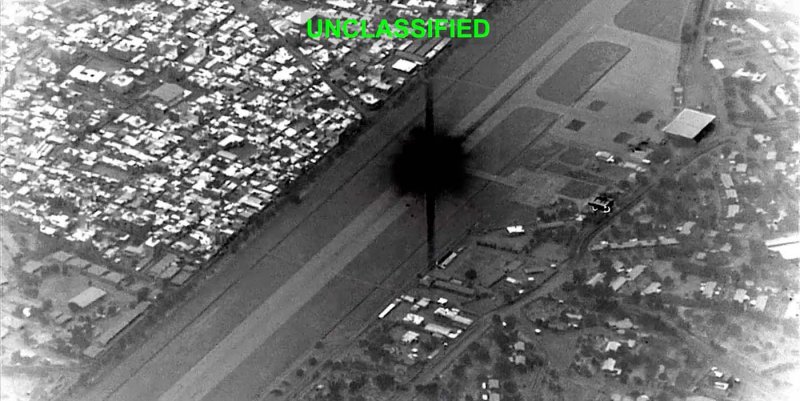


President Donald Trump earlier announced that US armed forces had carried out strikes on Iran’s strategic Kharg Island, stating that military facilities on the island were targeted and indicating that its oil infrastructure could also become a potential target.
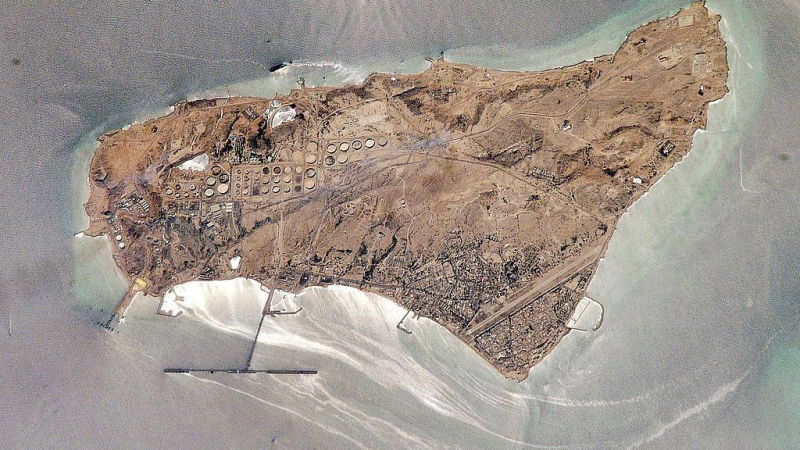
According to Stabil.az, Kharg Island, located in the northern part of the Persian Gulf, serves as the backbone of Iran’s oil export system and represents one of the country’s most critical sources of state revenue.
Approximately 90–95 percent of Iran’s crude oil exports pass through Kharg Island before being shipped to international markets.
Despite covering an area of only about 20 square kilometers, the island hosts large deepwater terminals capable of loading some of the world’s largest oil tankers. This infrastructure enables Iran to efficiently export crude oil, particularly to buyers in Asia.
The island’s facilities — including storage tanks, loading terminals and pipelines — form the operational center of Iran’s oil industry. The terminal receives crude oil from three major offshore fields: Aboozar Oil Field, Forouzan Oil Field and Dorood Oil Field. From there, the oil is transported through a complex network of subsea pipelines to storage facilities or exported to global markets.
Pipelines from some of Iran’s largest oil fields — Ahvaz Oil Field, Maroun Oil Field and Gachsaran Oil Field — also connect directly to storage tanks on Kharg Island. These facilities are capable of handling around 950 million barrels of crude oil annually.
Experts note that Kharg Island is crucial for financing the Iranian government and military. They argue that if Iran were to lose control of the island, the country would face serious difficulties maintaining normal economic operations.
Kharg Island’s strategic importance dates back decades. During the rapid expansion of Iran’s oil industry in the 1960s and 1970s, major infrastructure projects were developed there. Much of Iran’s coastline lacked sufficient depth for supertankers, making Kharg an ideal location for large-scale export terminals.
Beyond its energy significance, the island also holds religious and historical importance. Among its landmarks are the 7th-century Mir Muhammad Shrine, the Mir Aram Shrine known for inscriptions and torches dating back to the Achaemenid Empire era, as well as Zoroastrian burial grounds, Christian graves, tombs from the Sasanian Empire period, Islamic cemeteries, and the remains of a Dutch fort and garden dating to 1747.
Other strategically significant islands for Iran in the Persian Gulf include Qeshm Island, as well as the smaller islands of Abu Musa, Greater Tunb and Lesser Tunb. These locations are also considered important due to their oil infrastructure and strategic positions.
So why was Kharg Island chosen as a target?
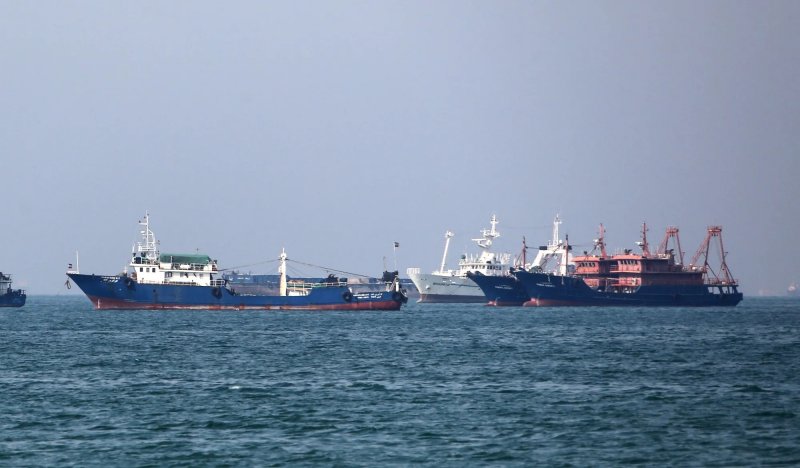
Iran had nearly halted operations in the Strait of Hormuz in late February amid rising tensions in the Middle East. In response, the United States issued strong warnings over the situation. Around 20 percent of the world’s oil supply passes through this vital maritime corridor, meaning disruptions can significantly affect global energy markets. The situation pushed oil prices close to $100 per barrel and raised concerns about broader economic impacts.
Iran, the fourth-largest crude producer in OPEC, declared that it would not export oil from the Persian Gulf while the conflict continues.
However, analysts believe the strike on Kharg Island is unlikely to go unanswered. Mohammad Bagher Qalibaf previously warned that if Iranian islands were attacked, Tehran would take retaliatory measures.
Stay updated with the latest news Follow us on Google Subscribe
-
 28 SEP 2026 17:58
 -
 28 SEP 2026 17:25
 -
 28 SEP 2026 16:36
 -
 28 SEP 2026 15:52
 -
 28 SEP 2026 15:16
 -
 28 SEP 2026 14:49
 -
 28 SEP 2026 14:22
 -
 28 SEP 2026 13:58
 -
 28 SEP 2026 13:36