Why Iran and the US struggle to reach an agreement
23 April 2026 09:12   23 Apr 2026 13:05 Share

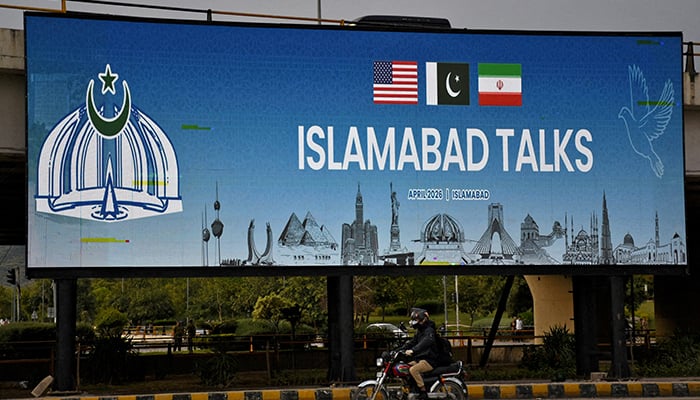
On April 21, Iran declined to travel to Islamabad, the capital of Pakistan, for a scheduled meeting with a US delegation. Tehran justified its decision by pointing to what it described as violations of the ceasefire regime by the United States, as well as the excessive conditions set by Washington. At the same time, the Associated Press reported that the planned visit of US Vice President James David Vance to Pakistan, where he was expected to participate in a new round of negotiations with Iran, has been postponed indefinitely.

According to “Sabil.az,” despite these developments, US President Donald Trump has extended the ceasefire with Iran for an indefinite period. The US president noted that this decision was made at the request of the Pakistani authorities.

In response, Mehdi Mohammadi, an advisor to the speaker of the Iranian parliament, stated that extending the ceasefire regime makes no sense and referred to the United States as “the losing party.”

The New York Times (NYT), citing Iranian officials, reported that Tehran does not trust Donald Trump. The reason given is that during his first term, he unilaterally withdrew from the “nuclear deal” signed under former President Barack Obama.

The report recalls that negotiations involving the United States, Iran, and several other countries lasted for nearly two years. However, Trump abandoned the agreement despite the complexity of the process. Later, when the Joe Biden administration attempted to revive a similar deal, Iranian leadership demanded guarantees that a future Trump administration would not withdraw from it again. The White House was unable to provide such assurances. According to the publication, this issue of trust has become the main obstacle to reaching a new and durable agreement.

News about -   Why Iran and the US struggle to reach an agreement

The NYT also notes that although Trump initiated negotiations with Iran twice over the past year, there were also instances where orders for airstrikes were issued while diplomatic talks were still in their early stages. In one example, at the end of February, Trump sent representatives to Geneva to meet Iranian officials. This occurred just one day before Iran’s former supreme leader Seyyed Ali Khamenei was killed in an airstrike in Tehran. American officials cited by the newspaper stated that Trump had already been leaning toward military action during those talks.

Iran’s chief negotiator and parliament speaker Mohammad Bagher Qalibaf publicly stated in mid-April that the US delegation “failed to gain the trust of the Iranian delegation.” According to the NYT, this issue has again been raised by Iran in current discussions, contributing to the postponement of new talks.

CNN, citing sources within the US administration, reported that Iran is also dissatisfied with Trump’s tendency to communicate through social media and to present positions as if agreements have already been reached, even when they have not yet been finalized. Iranian officials view this approach as unpopular domestically and politically sensitive.

As highlighted above, the central issue between the two sides is primarily a deep crisis of trust. Iranian leadership believes that any agreement reached with the United States could easily be reversed by future administrations. This makes the question of legally binding guarantees a key issue in negotiations. However, the structure of the US political system makes it difficult to provide such guarantees. As a result, any potential agreement depends not only on technical arrangements but also on political will and the rebuilding of mutual trust.

Another significant factor is regional and military tension. Recent developments indicate that military rhetoric and actions continue alongside diplomatic efforts, further complicating the situation. If either side resumes military activity, negotiations could be completely derailed. In addition, the influence of regional actors and allies in the Middle East also plays an important role in shaping the process.

News about -   Why Iran and the US struggle to reach an agreement

Economic considerations are also central to future prospects. Iran seeks relief from sanctions, while the United States demands stricter limitations on Iran’s nuclear program. Although these mutual interests create a potential basis for compromise, the maximalist positions of both sides make agreement more difficult. Increased economic pressure could push Iran toward greater flexibility; however, such a shift could also affect internal political dynamics.

Furthermore, the role of the international community may prove decisive. European countries and other global powers could act as mediators and help sustain dialogue. Participants of the previous nuclear agreement may attempt to establish a new framework for negotiations. Nevertheless, ongoing geopolitical rivalries on a global scale may limit the effectiveness of such efforts.

In conclusion, amid rising tensions and persistent mistrust between Iran and the United States, the outlook remains highly uncertain and complex. Donald Trump’s policies, particularly his withdrawal from the previous nuclear agreement, continue to serve as a major psychological and political barrier in bilateral relations. At present, significant obstacles remain to achieving a stable, long-term agreement between the two sides.


Stabil.Az 

Stay updated with the latest news Follow us on Google Subscribe