Why has the EU stopped funding Serbia?
4 May 2026 10:30   04 May 2026 12:06 Share

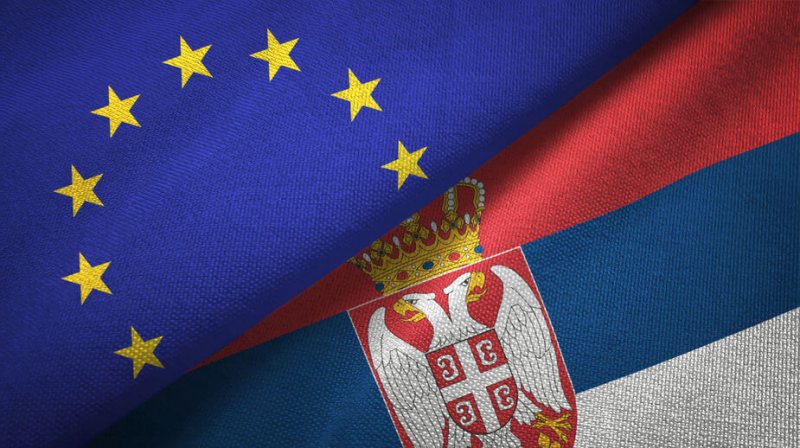
EU Enlargement Commissioner Marta Kos has announced that the European Union has halted all financial support to Serbia. According to her statement, the decision was taken due to concerns related to the country’s judicial system reforms.

As reported by Stabil.az, although Serbia is not yet a member of the European Union, it has previously been eligible for grants and financial assistance aimed at supporting legal and institutional reforms.

“We have currently stopped all payments within the framework of the development plan because there is a regression in the judicial system. Until this issue is resolved, the country will not be able to benefit from EU financial support,” Marta Kos said at a press conference in Fribourg.

It should be noted that Serbia applied for EU membership in 2009 and was granted candidate status in 2012. According to the Serbian government, the country has received more than 70 billion euros in EU grants, loans, and investments since 2000.

The issue of suspending or limiting EU funding for Serbia has been widely discussed in political and economic circles in recent years. It affects not only bilateral relations but also the broader stability of the Balkan region and Serbia’s European integration prospects. The reasons behind such EU decisions are complex and stem from a combination of political, legal, economic, and geopolitical factors.

One of the key reasons is the slow progress—and in some cases setbacks—in aligning Serbia’s institutions with EU standards. Candidate countries are expected to ensure the rule of law, judicial independence, effective anti-corruption measures, and strong democratic institutions. The EU has repeatedly expressed concerns about persistent shortcomings in these areas in Serbia, which can result in conditionality or suspension of financial assistance.

Another important factor is Serbia’s foreign policy orientation. The EU expects candidate countries to gradually align their foreign and security policies with those of the bloc. However, Serbia has maintained close relations with Russia and has not consistently followed EU sanctions policies. This position has become particularly sensitive in the context of the Russia–Ukraine war, with Brussels viewing Serbia’s balancing approach as a source of strategic uncertainty that may influence funding decisions.

The Kosovo issue also remains a central point of tension in EU–Serbia relations. Progress in normalizing relations with Kosovo is one of the key conditions for EU accession. Delays or lack of implementation of agreements reached under the Brussels Dialogue are often viewed negatively by the EU and can affect financial support mechanisms.

Concerns over transparency and efficiency in the use of EU funds also play a role. EU assistance is primarily directed toward infrastructure development, economic growth, and institutional reform. However, when questions arise regarding proper use or oversight of these funds, the EU tends to strengthen monitoring or temporarily suspend payments.

The suspension of funding could have significant consequences for Serbia. Economically, the EU is one of Serbia’s largest trade and financial partners. Reduced financial support could slow down infrastructure projects, weaken foreign investment inflows, and negatively impact economic growth. EU funds are particularly important for regional development and the agricultural sector.

Politically, such a move may influence domestic attitudes toward EU integration. Tense relations with Brussels could reduce public support for European accession and potentially strengthen interest in alternative partnerships with countries such as Russia or China, further increasing geopolitical competition in the Balkans.

At the same time, the suspension of funds could also serve as a catalyst for reforms. The EU frequently applies a “conditionality” approach, where financial assistance is restored once required reforms are implemented. In this sense, funding suspension may pressure Serbian authorities to accelerate institutional and judicial reforms.

The decision also carries implications for regional stability. The Western Balkans has historically been a sensitive geopolitical area, and the EU plays a key role in maintaining stability there. A reduction in financial engagement with Serbia could contribute to economic and social pressures that may indirectly affect neighboring countries.

In conclusion, the EU’s suspension of funding to Serbia is driven by a combination of structural and political factors and may have wide-ranging consequences. It functions both as a form of political pressure and as an incentive for reform. The future of EU–Serbia relations will largely depend on progress in aligning Serbia’s institutions and policies with EU standards.


Stabil.Az 

Stay updated with the latest news Follow us on Google Subscribe