About
About Contact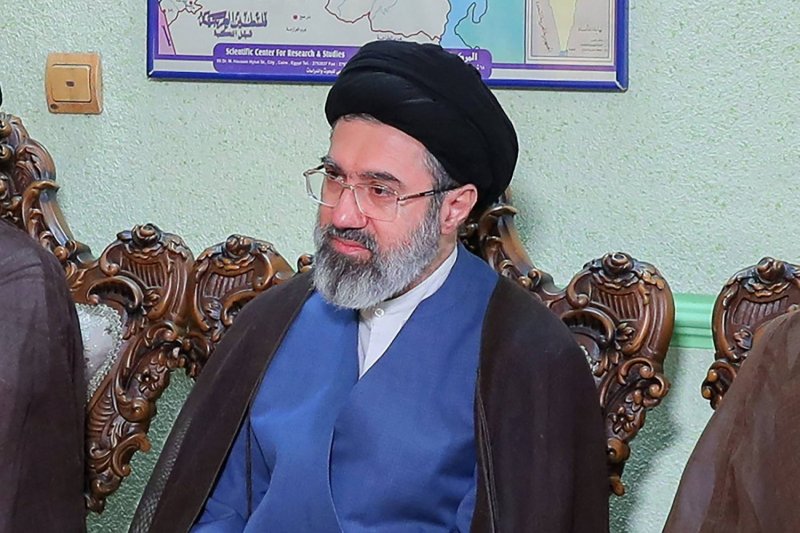


According to Stabil.az, Iran’s Assembly of Experts elected the new Supreme Leader on the morning of March 8. However, it was initially reported that the successor to Ali Khamenei would be officially announced to the public at a later stage.
Mojtaba Khamenei, who is widely considered to have significant influence within Iran’s political and religious circles, has become the third Supreme Leader of the country and has been appointed for life. Under the Iranian Constitution, the position of Supreme Leader may be held by either a political or religious figure, provided that the candidate meets several requirements. These include adherence to religion, strong managerial abilities, a positive public reputation, commitment to the country’s official religion, and belief in the principles of the Islamic Republic.
For many years, Mojtaba Khamenei worked in key roles within the Supreme Leader’s administration and maintained close ties with the Islamic Revolutionary Guard Corps (IRGC).
Several figures had been considered possible successors before the final decision. One of them was Alireza Arafi, a close associate of Ali Khamenei and deputy chairman of the Assembly of Experts. Arafi also heads Iran’s religious education system and previously served on the Guardian Council, which is responsible for vetting candidates for elections and reviewing legislation passed by parliament.
Another potential candidate was cleric and Assembly of Experts member Mohammad Mehdi Mirbagheri, who represents one of the most conservative factions within the Iranian clergy. Hassan Khomeini, the grandson of Islamic Republic founder Ruhollah Khomeini, was also mentioned as a possible contender for the position.
Hashem Bushehri was likewise considered a potential candidate. He is a senior cleric with close connections to institutions involved in the succession process, particularly the Assembly of Experts, where he serves as first deputy chairman.
Attention has now turned to Mojtaba Khamenei, the 56-year-old cleric who has assumed the country’s highest political and religious position.
Despite avoiding the public spotlight for much of his life and never holding formal government office, Mojtaba Khamenei is widely believed to wield considerable influence within Iran’s political system, especially within the IRGC.
Officials reportedly began noticing his growing political influence in the mid-1990s, when he was frequently seen alongside IRGC fighters and commanders returning from the Iran-Iraq War (1980–1988).
However, Mojtaba Khamenei came under greater public attention during the 2005 presidential election. Analysts believe he played a significant role in organizing that vote. According to some experts, he supported the rise of Mahmoud Ahmadinejad, who at the time was a relatively little-known politician and former IRGC member, helping him secure victory in the election.
The 2005 election weakened the political position of former President Akbar Hashemi Rafsanjani. Another candidate in that race, Mehdi Karroubi, later published an open letter accusing Mojtaba Khamenei of interfering in the electoral process and assisting Ahmadinejad’s ascent to power.
Similar accusations resurfaced four years later during Ahmadinejad’s controversial re-election in 2009, which triggered mass protests across several Iranian cities. Some demonstrators opposed the possibility of Mojtaba Khamenei succeeding his father as Supreme Leader and chanted “Death to Mojtaba!” during the protests.
During those turbulent months, numerous reports also suggested that Mojtaba played an increasing role in suppressing the so-called “Green Movement” protests.
Mojtaba Khamenei has also faced allegations of financial corruption. According to sources close to the government, roughly 60 percent of Iran’s economy is managed through holding companies and foundations controlled by Ali Khamenei. These include major institutions such as the Mostazafan Foundation, the Imam Khomeini Relief Committee, the Khatem al-Anbiya Construction Headquarters, and Astan Quds Razavi. Reports have suggested that Mojtaba Khamenei oversaw the financial activities of these structures.
A 2026 Bloomberg study claimed that Mojtaba Khamenei holds assets including high-value real estate in London and Dubai, as well as investments in shipping, banking, and the hotel sector across Europe. According to the report, many of these assets are not registered directly in his name but are held through intermediaries and complex corporate structures established in several countries.
Iran has had two previous Supreme Leaders. Ruhollah Khomeini became the first after the Islamic Revolution that overthrew the Shah’s rule. As the leader of the revolutionary movement, he enjoyed broad support within the country until his death in 1989.
During Khomeini’s leadership, Ali Khamenei served as Iran’s president. At that time, the presidency held more symbolic authority because executive power largely belonged to the prime minister.
Ali Khamenei was killed on February 28 during joint Israeli and US air strikes on Iran. He had assumed the role of Supreme Leader in June 1989 and remained in the position for nearly 37 years.