What the new Constitution means for Kazakhstan
https://stabil.az/en/news/what-the-new-constitution-means-for-kazakhstan
Copied
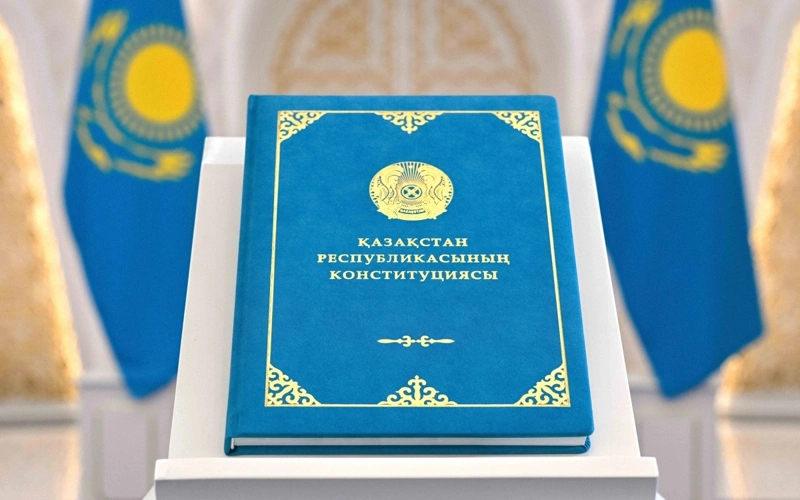
The referendum on the new Constitution in Kazakhstan has concluded successfully.
According to “Stabil.az,” preliminary results show that voter turnout exceeded 70 percent, with around 90 percent of participating voters supporting the new document.
Speaking after the vote, President Kassym-Jomart Tokayev described the referendum as a historic milestone. He emphasized that the outcome reflects the people’s choice regarding the country’s future path and marks a step toward building a just, law-governed society with responsible and active citizens.
Tokayev, who initiated the constitutional changes ahead of the referendum, acknowledged that the existing constitution had played a crucial role during the early years of independence following the collapse of the Soviet Union. However, he stressed that evolving circumstances require a new foundational framework.
What are the main changes?
One of the most notable aspects of the new Constitution is the expansion of presidential powers. Under the updated system, the president gains broader authority in appointing key state officials. In addition to existing powers, the president can now appoint the heads of the Supreme Court, the Central Election Commission, the Supreme Audit Chamber, the State Security Service, and the Commissioner for Human Rights.
The president is also granted the authority to appoint 10 judges of the Constitutional Court, six members of the Central Election Commission, and eight members of the Supreme Audit Chamber, subject to approval by the newly established unicameral parliament, the Kurultay.
If the Kurultay rejects presidential nominees twice, the president has the right to dissolve the parliament. Furthermore, during periods when the legislature is not functioning, the president can issue decrees carrying the force of constitutional or ordinary law.
The reforms also reintroduce the position of vice president, which previously existed between 1991 and 1996. Under the new framework, the vice president will represent the country internationally, act on behalf of the president in parliamentary and official settings, and maintain ties with public, cultural, and scientific communities. Additional responsibilities will be defined by the president.
Changes in rights and legal provisions
The new Constitution broadens the scope of freedoms related to expression. While the previous version guaranteed freedom of speech and creativity, the updated text extends these protections to include scientific, technical, and artistic creativity.
Language policy has also been revised. The earlier wording that placed the Kazakh and Russian languages “on an equal basis” has been replaced with a formulation stating they “shall be used alongside,” which experts interpret as signaling a stronger emphasis on the Kazakh language.
The document strengthens personal data protection provisions and explicitly affirms the separation of religion and the state.
A controversial amendment redefines marriage as a union between a man and a woman, replacing the previous wording that referred simply to the union of two individuals. This change follows earlier measures restricting LGBTQ+ advocacy.
Foreign policy and legal hierarchy
Another significant shift concerns the relationship between domestic law and international obligations. Previously, international agreements held priority over national legislation. This provision has been removed from the new Constitution.
Despite this, the country remains committed to international law and continues to uphold key foreign policy principles such as cooperation, dialogue, and non-interference. However, Kazakhstan is seeking to remove the constitutional clause committing it to not being the first to use armed force.
Transparency requirements
The new Constitution also introduces stricter transparency rules. Non-governmental organizations and political parties receiving foreign funding will be required to publicly disclose all financial support, including funds from foreign governments, organizations, companies, and affiliated entities.
Overall, the new Constitution represents a major shift in Kazakhstan’s political and legal structure, combining expanded executive authority with changes to civil rights, governance, and international positioning.
Stay updated with the latest news Follow us on Google Subscribe
About
Contact