About
About Contact
What are sea mines and why the Strait of Hormuz is at risk
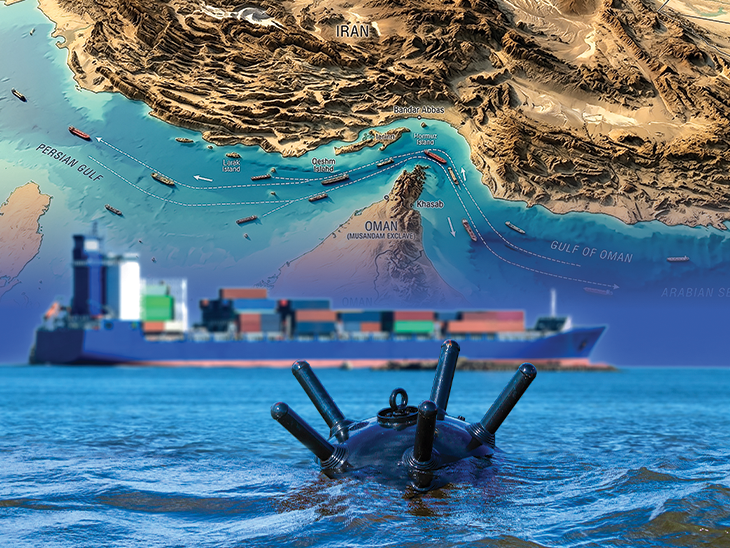


One of the key issues currently on the global agenda is ensuring the safe and uninterrupted passage of ships through the strategically important Strait of Hormuz. However, reports of possible mining of the strait by Iran, amid recent tensions in the Middle East and the lack of confirmed information on the exact locations of any mines, are creating additional risks and uncertainties for maritime traffic.
According to Stabil.az, the US military has stated that its naval forces may conduct an operation to clear mines allegedly placed by Iran in the Strait of Hormuz.
So what exactly are sea mines, and how do they work?
Sea mines are considered one of the most cost-effective weapons in modern warfare. According to an analysis by the Philadelphia-based Institute for Foreign Policy Studies, modern advanced mines can be produced for tens of thousands of dollars, while the economic and strategic damage they may cause is significantly higher.
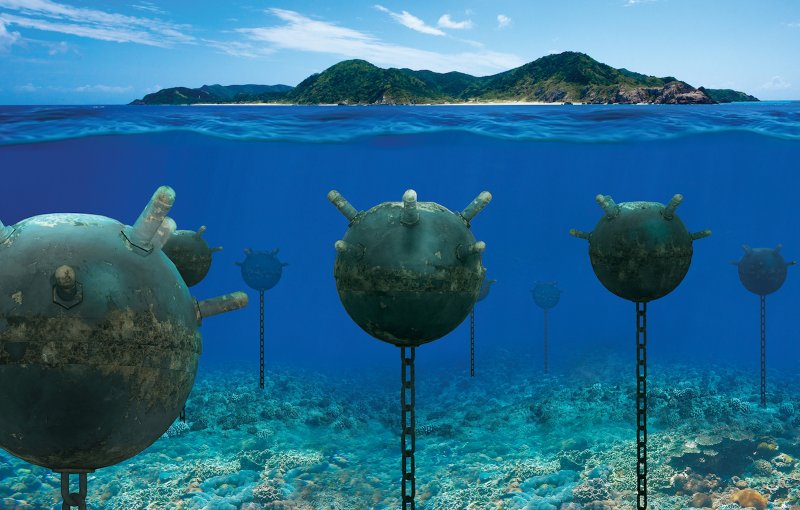
Analysts estimate that Iran has approximately 2,000 to 6,000 mines in its arsenal, many of which are believed to be domestically produced. These weapons are generally divided into three main categories based on how they interact with targets:
Contact mines: These are classic models dating back to World War I, such as the M-08. They are anchored to the seabed and detonate upon direct physical contact with a ship’s hull.
Bottom (influence) mines: Models such as the “Maham-2” rest on the seabed and are triggered by acoustic, magnetic, or pressure signals generated by passing vessels. Because of this, they are significantly harder to detect and can detonate even without direct contact.
“Smart” and rocket mines: More advanced systems, including the EM-52 rocket mine, reportedly of Chinese origin, can be placed at depths of up to 200 meters. When a vessel is detected passing overhead, the mine launches a rocket that strikes the underside of the ship.
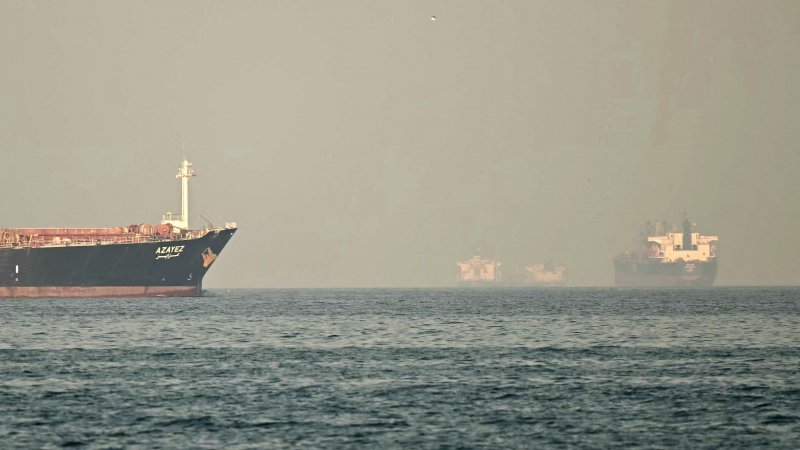
Where could mines be located in the Strait of Hormuz?
The Iranian side has not officially confirmed any specific mine locations in the Strait of Hormuz, stating only that mines may have been deployed. The fact that US naval forces are currently involved in search operations suggests that Washington also lacks precise information on their placement.
However, military analysts argue that if mines have indeed been deployed, they are likely positioned strategically to exploit the geography of the narrow waterway. The objective would be to redirect international shipping into tighter and more vulnerable corridors.
A map released last week by Iran’s Islamic Revolutionary Guard Corps reportedly shows shipping lanes being directed closer to Iranian coastal waters than before.
Romanian naval reserve officer Alexandru Cristian Hudisteanu told Al Jazeera that systematic mining is often used in military simulations to restrict access to specific maritime zones. In the case of the Strait of Hormuz, he said, this could involve either mining the entire passage or blocking selected sections.
He also noted that the psychological effect of mines is as significant as their physical placement: “Even if the minefield is not everywhere, in the minds of those who have to pass through it, it could be anywhere.”
It should be noted that mine-clearing operations are slow, highly precise, and extremely dangerous. The process generally involves two main stages: detecting mines using high-precision sonar and neutralizing them using mechanical or magnetic systems.
Hudisteanu further explained that mine-clearing vessels are typically specialized for a single task and often lack strong protection in other areas. As a result, these ships can become “easy targets” during operations and require substantial protection against coastal missile systems or fast attack craft.
Stay updated with the latest news Follow us on Google Subscribe
-
 28 SEP 2026 17:58
 -
 28 SEP 2026 17:25
 -
 28 SEP 2026 16:36
 -
 28 SEP 2026 15:52
 -
 28 SEP 2026 15:16
 -
 28 SEP 2026 14:49
 -
 28 SEP 2026 14:22
 -
 28 SEP 2026 13:58
 -
 28 SEP 2026 13:36