Turkish Airlines launches direct flights to Yerevan: A new stage for the region
https://stabil.az/en/news/turkish-airlines-launches-direct-flights-to-yerevan-a-new-stage-for-the-region
Copied
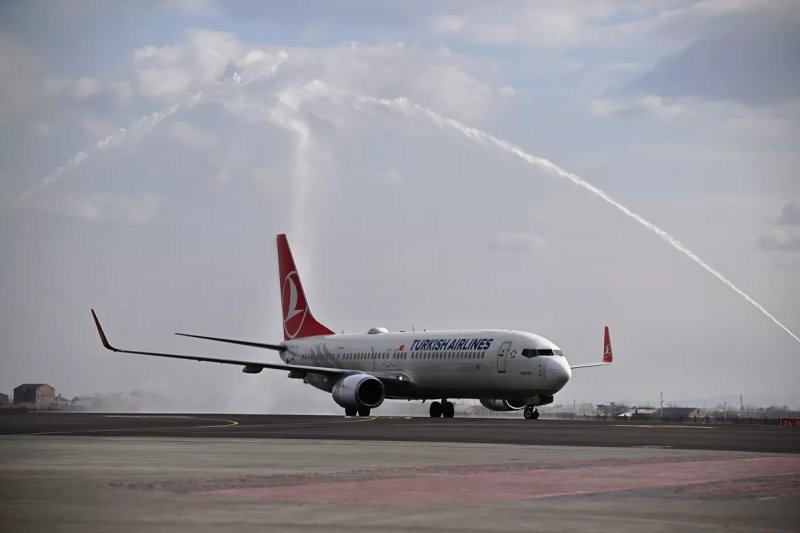
March 11 of this year marked a notable milestone in the development of transport and diplomatic relations across the South Caucasus and Türkiye. On that date, Turkish Airlines (THY) launched direct flights between Istanbul and Yerevan for the first time, signaling a significant shift in regional connectivity.
According to Sabil.az, the introduction of regular flights on the Istanbul–Yerevan–Istanbul route is being viewed as the beginning of a new phase for the region, particularly given the history of closed borders and limited transportation links between the two countries over many years.
This development carries considerable importance across multiple spheres, including economic cooperation, tourism, and diplomacy. The establishment of direct air connectivity is widely regarded as part of broader efforts aimed at normalizing relations between Türkiye and Armenia.
For decades, diplomatic relations between Ankara and Yerevan have been strained. However, in recent years, evolving geopolitical dynamics in the region, along with renewed diplomatic engagement, have created conditions for cautious progress. A key turning point came after the 2020 Patriotic War, which resulted in a decisive victory for Azerbaijan and reshaped the political landscape of the South Caucasus. In the aftermath, issues such as reopening regional communication lines, expanding economic ties, and strengthening stability gained renewed urgency.
Within this changing context, dialogue between Türkiye and Armenia began to regain momentum. The appointment of special envoys, the organization of meetings in third countries, and the gradual removal of certain technical barriers contributed to a relative easing of tensions and helped build a foundation for practical steps forward.
The launch of the first direct flight on March 11 stands out as one of the tangible outcomes of this normalization process. Operated by Turkish Airlines, the inaugural flight departed from Istanbul Airport and arrived at Zvartnots International Airport in Yerevan. The airline has announced plans to operate flights on this route several times per week, indicating a commitment to maintaining and potentially expanding the service.
Airline representatives note that the route holds strong potential not only for business travel and tourism, but also for fostering humanitarian and people-to-people connections. Istanbul, as one of the region’s largest and most strategically positioned aviation hubs, offers extensive global connectivity. Through this gateway, passengers from Armenia will gain more convenient access to destinations across Europe, Asia, the Middle East, and beyond.
Experts suggest that the introduction of direct flights could have a positive impact on bilateral economic relations. Improved connectivity is expected to simplify logistics, encourage business travel, and support the growth of trade between the two countries. Reduced travel time and increased accessibility often serve as key drivers for commercial engagement.
The tourism sector is also poised to benefit significantly. Istanbul remains one of the world’s leading tourist destinations, known for its rich historical heritage, vibrant culture, and diverse attractions. Each year, the city draws millions of visitors, and direct flights from Yerevan are likely to facilitate increased tourist flows in both directions.
From a broader regional perspective, the development of transport and logistics networks in the South Caucasus has become a central policy priority in recent years. In this context, the expansion of air links between Istanbul and Yerevan is seen as an important step not only for the two countries involved, but for the region as a whole.
Istanbul’s role as a global aviation hub—connecting Europe, Asia, and the Middle East—positions it as a key transit point. Direct access to this network provides Armenia with new logistical and travel opportunities, potentially enhancing its integration into international transport systems.
Moreover, the strengthening of air connectivity could contribute to wider regional integration efforts. Analysts point out that, over time, this progress may pave the way for additional transport initiatives, including cooperation on railway and highway infrastructure projects.
Beyond economic and logistical considerations, the resumption of direct flights also has a social dimension. After years of limited interaction, easier travel between the two countries creates new opportunities for people-to-people contact, cultural exchange, and the rebuilding of interpersonal ties.
The launch of Turkish Airlines flights on the Istanbul–Yerevan route is therefore seen as an important signal of evolving regional dynamics and expanding cooperation prospects. Whether this initiative will prove sustainable in the long term, whether flight frequencies will increase, and whether additional airlines will enter the route are questions that remain open.
Nevertheless, many analysts agree that expanding transport links can play a constructive role in promoting regional stability and economic integration. Closer connections among South Caucasus countries are increasingly viewed as a key factor in supporting long-term development and cooperation across the region.
Stay updated with the latest news Follow us on Google Subscribe
About
Contact