Trump’s tariff gambit after Supreme Court blow: What comes next?
21 February 2026 15:59   21 Feb 2026 16:21 Share

U.S. President Donald Trump has signed a new executive order imposing 10% tariffs on products imported from nearly all countries, a move that comes immediately after a landmark ruling by the Supreme Court of the United States limiting his authority to unilaterally impose such measures.

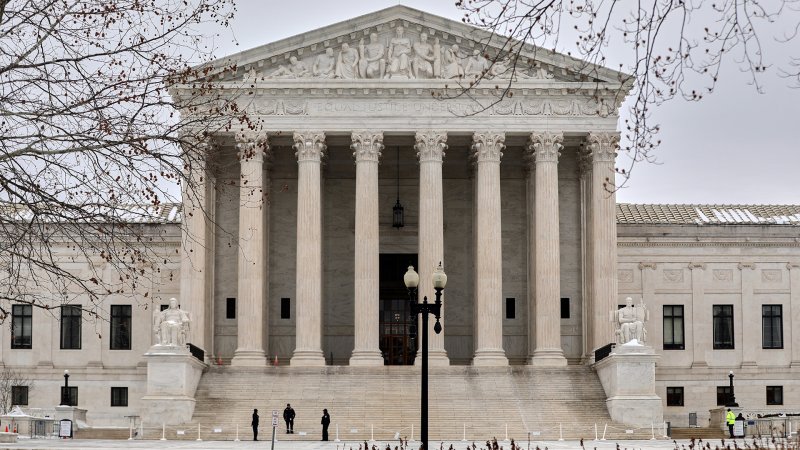
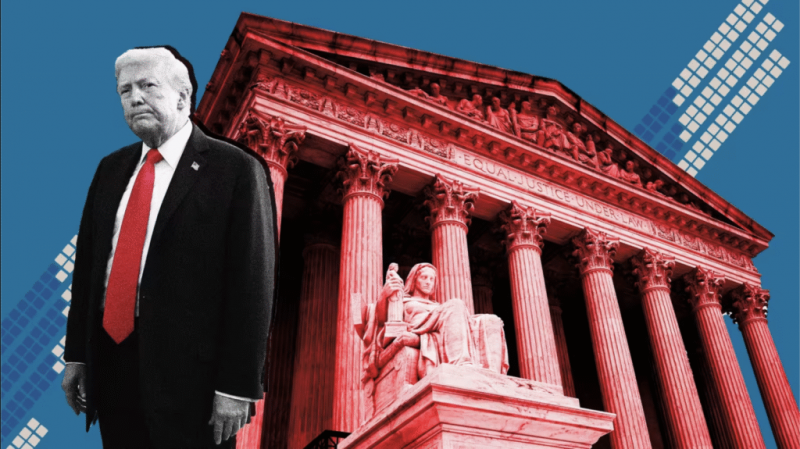
According to reports, the decision follows the Court’s February 20 ruling that the 1977 International Emergency Economic Powers Act (IEEPA) does not grant the president the authority to impose sweeping tariffs on imported goods. The Court concluded that Trump exceeded his constitutional powers when he introduced large-scale tariffs on dozens of U.S. trading partners, including the European Union, by invoking emergency powers.

Court ruling: A blow to executive authority

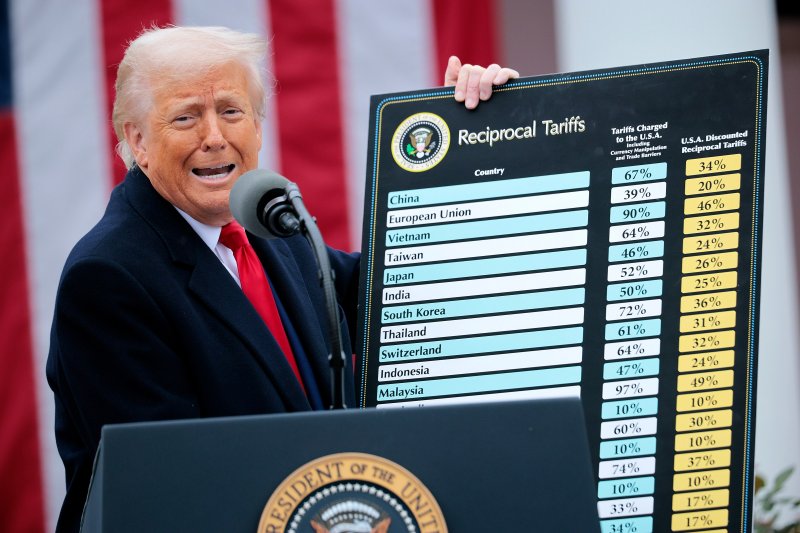
The Court found that the vast majority of the tariffs introduced under the emergency framework were unlawful. This included so-called “reciprocal” tariffs applied to imports from almost all countries, as well as 25% duties on goods from Canada, Mexico and China.

In its reasoning, the Court emphasized that the authority to levy taxes and duties rests exclusively with Congress. While emergency legislation allows the president to regulate certain aspects of foreign trade during crises, it does not provide blanket authority to restructure tariff policy without legislative approval.

The ruling represents a significant limitation on presidential power in trade matters and may reshape the balance between the executive branch and Congress in economic policymaking.

Trump’s response: A new legal path

Trump had previously indicated that such a ruling was possible and stated he was prepared to act through alternative legal mechanisms. Following the Court’s decision, he invoked provisions of the 1974 Trade Act, which allow the president to impose tariffs for a limited period of 150 days. Any extension beyond that timeframe would require approval from Congress.

Under the new executive order, the 10% tariffs are scheduled to take effect on February 24. However, the White House clarified that the measure includes several important exemptions aimed at shielding critical sectors of the U.S. economy.

News about -   Trump’s tariff gambit after Supreme Court blow: What comes next?

Key exemptions and strategic industries

The new tariffs will not apply to certain categories of goods deemed essential for national economic security or domestic supply stability. These include:

  • Rare earth elements and specific strategic metals

  • Certain energy products that cannot be sufficiently produced within the United States

  • Selected agricultural goods such as beef, oranges and tomatoes

  • Pharmaceuticals and key components used in drug production

  • Some electronics and categories of vehicles

  • Books and aerospace industry products

By carving out these exemptions, the administration appears to be balancing protectionist objectives with economic pragmatism, attempting to avoid supply disruptions and sharp price increases in critical industries.

Impact on U.S. trade relations

Western analysts argue that the Court’s ruling weakens Washington’s negotiating leverage in trade discussions. Several countries — including China, Canada, the United Kingdom and the European Union — may interpret the decision as a sign of reduced executive flexibility in trade disputes.

At the same time, the new tariff announcement introduces fresh uncertainty. Trading partners must now evaluate whether the 10% duties will remain temporary or evolve into longer-term measures through congressional approval.

For major exporters to the U.S., even a temporary tariff could alter pricing strategies, trade volumes and investment decisions. Given that the United States remains one of the world’s largest consumer markets, changes in its import policy inevitably reverberate across global supply chains.

Economic and inflationary consequences

The rollback of previous tariffs and the introduction of new, more uniform duties could have mixed economic effects. On one hand, the cancellation of earlier measures may ease trade tensions and help stabilize financial markets. On the other hand, the new 10% tariffs could increase costs for American importers and consumers, potentially influencing inflation dynamics.

Supply chains, already reshaped by geopolitical tensions and post-pandemic adjustments, may undergo further restructuring. Companies might accelerate diversification strategies, shifting sourcing away from high-tariff jurisdictions or investing in domestic production capacity.

In the short term, markets may react with volatility. In the longer term, however, the Court’s decision could reinforce confidence in institutional checks and balances within the U.S. system, reassuring global investors about the rule of law.

News about -   Trump’s tariff gambit after Supreme Court blow: What comes next?

Broader geopolitical implications

Beyond economics, the developments carry geopolitical weight. Trade policy has increasingly become a tool of strategic competition. Any recalibration of U.S. tariff authority affects not only bilateral trade flows but also the architecture of the international trading system.

For emerging economies reliant on exports to the United States, even modest tariff adjustments can significantly affect growth projections. For developed economies, the focus may shift toward negotiating sector-specific arrangements or strengthening regional trade blocs to mitigate exposure.

A defining moment for trade policy

Ultimately, the confrontation between the executive branch and the judiciary over tariff authority marks a pivotal moment in U.S. trade governance. The Court’s decision clarifies constitutional boundaries, while Trump’s response demonstrates a determination to continue pursuing protectionist trade measures within alternative legal frameworks.

Whether these actions lead to renewed trade tensions or a more structured, congressionally guided tariff policy remains to be seen. What is clear, however, is that the implications extend far beyond Washington — influencing markets, supply chains and diplomatic relations worldwide.


Stabil.Az 

Stay updated with the latest news Follow us on Google Subscribe