Russia-Ukraine talks in Geneva show progress — but no breakthrough
https://stabil.az/en/news/russia-ukraine-talks-in-geneva-show-progress-but-no-breakthrough
Copied
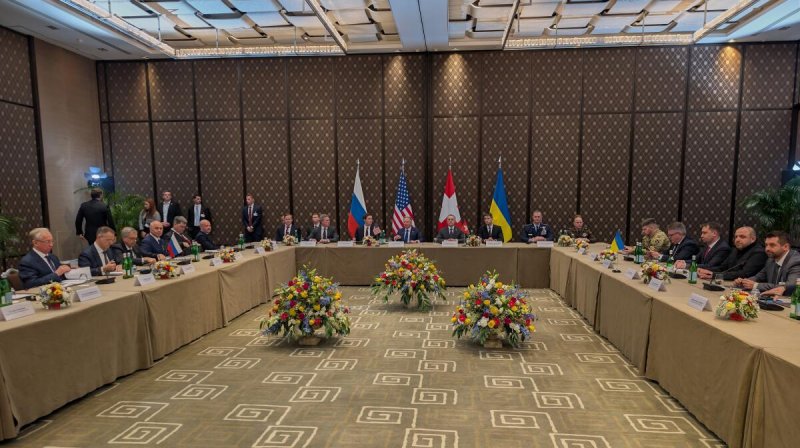
The third round of U.S.-mediated negotiations between Russia and Ukraine took place on February 17–18 at the InterContinental Geneva hotel in Switzerland.
According to Stabil.az, the first day of discussions lasted around six hours, while the second day continued for approximately two hours. Journalists present at the venue described the atmosphere as highly tense. The talks were held in three formats: Russia–U.S., Russia–Ukraine, and Russia–U.S.–Ukraine.
The United States and Ukraine sent the same delegations that had participated in the previous round of talks in Abu Dhabi. The U.S. delegation was led by President Donald Trump’s special representative Stephen Witkoff and Jared Kushner, businessman and son-in-law of the U.S. president. Ukraine was represented by Rustam Umerov, Secretary of the National Security and Defense Council.
Russia, however, expanded its delegation to 20 members. Officially, three participants were confirmed: the delegation was headed by Vladimir Medinsky, an aide to the Russian president, and included Deputy Foreign Minister Mikhail Galuzin and Admiral Igor Kostyukov, head of the Main Intelligence Directorate of the General Staff. Medinsky and Galuzin had previously represented Moscow in direct talks with Ukraine in Istanbul in 2025, while Kostyukov led Russia’s delegation at two meetings in Abu Dhabi.
Unlike the UAE discussions, which focused mainly on military matters, the Geneva round addressed broader political issues, including territorial questions.
Following the talks, delegation leaders offered brief remarks to the press. Medinsky described the negotiations as “difficult but businesslike” and said another meeting would be held “in the near future,” though it remains unclear whether it will take place again in Geneva.
Stephen Witkoff adopted a more cautious tone, thanking Switzerland for hosting the talks and noting that progress had been made thanks to the efforts of President Donald Trump.
Rustam Umerov provided more detailed comments, explaining that discussions covered both political and military tracks. “Security parameters and mechanisms for implementing potential decisions were discussed. Some issues have been clarified, and further coordination continues on others,” he said. While acknowledging progress, he declined to provide specifics. Umerov added that the next stage would require consensus before presenting any prepared proposals to Presidents Vladimir Putin and Volodymyr Zelensky.
President Zelensky later commented that in the military dimension, all three sides had acted “constructively.” He suggested that if there is sufficient political will, the military could agree on a mechanism to monitor a ceasefire, with U.S. participation in the monitoring process.
Where does the settlement process stand?
Despite the earlier Abu Dhabi talks being described as “truly constructive,” core disagreements remain unresolved. Western media reported ahead of the Geneva meeting that negotiations had reached an impasse. According to those reports, Russia is unwilling to retreat from key demands, including full control over Donbas.
The most contentious issues remain the status of Crimea, the self-proclaimed Donetsk and Luhansk “people’s republics,” and the Zaporizhzhia and Kherson regions. Russia’s constitution lists these territories as part of the federation, and Moscow has repeatedly insisted that Donbas is Russian territory “under any circumstances.” Ukraine, meanwhile, considers the fate of these areas one of its “red lines.”
While Kyiv previously demanded the full restoration of territorial integrity, it now signals it could accept freezing the conflict along the current front line and acknowledge the de facto loss of some territories—though not recognize such losses legally.
In recent days, President Trump has intensified pressure on Kyiv, urging Zelensky to accelerate a peace agreement. Zelensky has acknowledged Washington’s pressure but said it is unfair to frame concessions primarily around Ukraine.
Zelensky stated that withdrawing Ukrainian forces from Donbas would only be possible if Russia did the same. He also suggested that any peace agreement could be submitted to a nationwide referendum, but warned that a deal requiring withdrawal from Donbas would likely be rejected by the public.
Some Western media outlets have reported divisions within the Ukrainian delegation regarding the settlement. Zelensky’s office has denied such claims, emphasizing that there is no concept of a “quick” or “slow” agreement. “It would be quick to give up land without guarantees. A meaningful agreement takes time,” officials said.
According to Reuters, the U.S. and Ukraine have discussed the possibility of concluding negotiations by March. However, deadlines may be extended due to disagreements over territorial issues. U.S. Secretary of State Marco Rubio has expressed doubts about Russia’s seriousness in ending the conflict, though he acknowledged that some technical-level progress has been made.
Stay updated with the latest news Follow us on Google Subscribe
About
Contact