About
About Contact
How Nvidia’s AI chips could redefine the PC industry
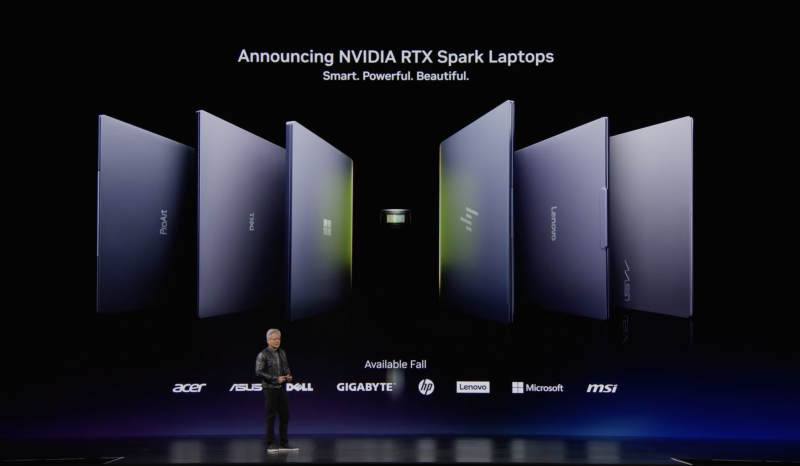


The global technology sector is approaching what many consider the next major stage of evolution. US-based technology giant Nvidia, which has already established itself as a dominant force in the industry through its advanced artificial intelligence (AI) chips for data centers and cloud computing systems, is now preparing to bring a similar transformation to the personal computer market.
According to “Sabil.az,” the company’s new RTX Spark superchip, introduced in partnership with Microsoft, along with the integrated N1X processor, is expected to open a new chapter in the history of computing technology.
Nvidia states that the chip will be integrated into a range of Windows-based personal computers and laptops produced by leading brands such as Lenovo, HP, Dell, Microsoft Surface, and Asus, with availability expected in the fall of 2026.
The fact that Nvidia CEO Jensen Huang has described this development as being “as significant as the transition from telephones to smartphones” suggests that this is not merely a routine product launch, but rather a fundamental shift in the philosophy of personal computing systems.
For decades, personal computers have functioned as passive tools that execute user commands, process data, and operate strictly within predefined tasks. However, RTX Spark is said to fundamentally disrupt this paradigm. According to Nvidia’s statements, the superchip is designed for the “era of AI agents.” This implies that computers will no longer simply execute software, but instead act as “intelligent partners” capable of understanding user behavior, making proactive decisions, and performing complex tasks in real time.
This raises an important question: what changes will this bring to everyday life? Devices equipped with RTX Spark and N1X processors are expected to run large artificial intelligence models directly on the device itself (on-device computing), without relying on cloud-based systems or constant internet connectivity. This offers significant advantages in terms of data privacy and security, as well as enabling near-instant AI responses with minimal latency. From video editing and software development to complex data analysis and routine office tasks, many processes could become increasingly automated through AI assistance.
One of the key factors supporting this project’s potential success is Nvidia’s strategic partnership with Microsoft. While Nvidia provides the advanced hardware architecture, Microsoft remains the dominant force in personal computer software. The jointly developed N1X processor is designed to integrate seamlessly with AI features within the Windows operating system, including enhanced versions of tools such as Copilot.
This collaboration has already attracted strong interest from major industry manufacturers. By the fall of 2026, a wide range of leading Windows-based device makers are expected to incorporate this technology into their products.
Historically, Nvidia has been best known as a producer of graphics processing units (GPUs) for gaming and high-performance data center applications. Meanwhile, the central processing unit (CPU) market for personal computers has long been dominated by a small number of established companies. The introduction of the RTX Spark and N1X processors represents a potential disruption to this long-standing balance.
Until now, leadership in the global computer processor market has largely been shared among the following companies:
- Intel – the long-time leader of traditional x86 architecture.
- AMD (Advanced Micro Devices) – a strong competitor in both CPUs and GPUs.
- Qualcomm – a major mobile chipmaker that has recently been attempting to enter the Windows PC market with ARM-based solutions.
- Apple – a major innovator that has transformed the macOS ecosystem with its proprietary “M” series chips.
Nvidia’s direct entry into the CPU market could pose a serious challenge to both Intel and AMD. Traditional processors are often considered less efficient than Nvidia’s architectures in handling graphics-intensive workloads and AI-driven computations. At the same time, the Windows ecosystem may now gain a competitive response to Apple’s high-performance and energy-efficient chip designs. This could potentially trigger one of the most intense periods of competition in the personal computer industry in the past two decades.
Nvidia’s RTX Spark is therefore not only viewed as a technological upgrade, but also as the beginning of a new digital era. Expected to reach consumers from the fall of 2026, this next-generation technology is likely to reshape not only productivity, but also creative industries, education, and everyday digital behavior. By bringing data center-level AI power directly to personal devices, Nvidia is signaling that the future of computing is already beginning to take shape.
Stay updated with the latest news Follow us on Google Subscribe
-
 28 SEP 2026 17:58
 -
 28 SEP 2026 17:25
 -
 28 SEP 2026 16:36
 -
 28 SEP 2026 15:52
 -
 28 SEP 2026 15:16
 -
 28 SEP 2026 14:49
 -
 28 SEP 2026 14:22
 -
 28 SEP 2026 13:58
 -
 28 SEP 2026 13:36