About
About Contact
Drone industry: Ukraine seeks alternatives to Chinese components
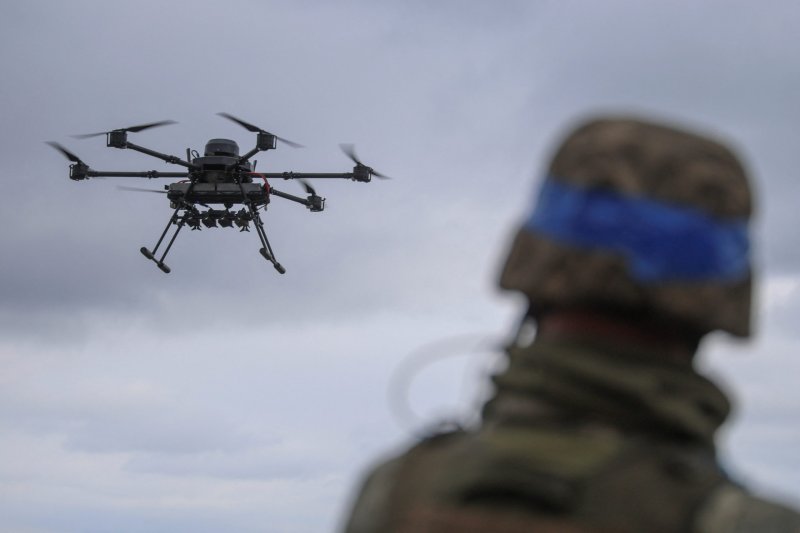


The ongoing war between Russia and Ukraine has fundamentally transformed the nature of modern combat operations. Over time, unmanned aerial vehicles (UAVs) have become one of the key instruments on the battlefield. They are widely used for reconnaissance, fire correction, and strikes on enemy rear positions. The mass deployment of drones has played an important role in slowing the advance of Russian troops, while also accelerating the development of Ukraine’s domestic defense industry.
According to Stabil.az, however, a significant portion of global supply chains for drone components still depends on China. Against this backdrop, Kyiv, along with European countries and the United States, has intensified efforts to identify alternative suppliers.
The Guardian reports that Ukraine is increasing efforts to reduce its reliance on Chinese-made components in UAV production while simultaneously expanding its manufacturing capacity to meet frontline demands.
According to the independent Ukrainian analytical center Snake Island Institute (SII), one of the most promising partners for Ukrainian drone manufacturers is Taiwan, which has strong capabilities in microelectronics, navigation systems, and batteries—areas where Western suppliers often lag behind.
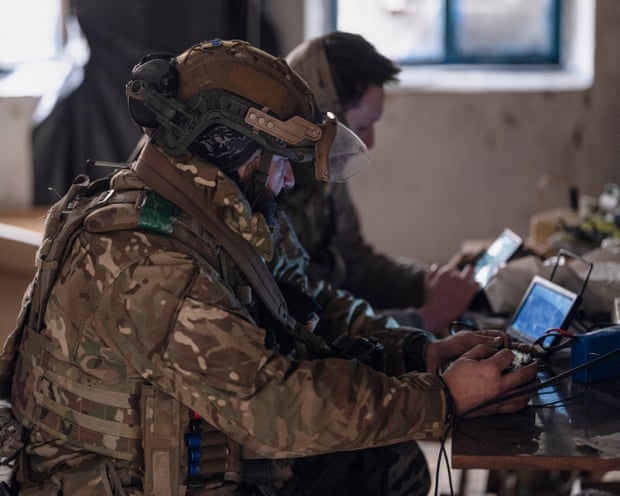
Research data indicates that in 2025, Taiwanese drone exports to Europe increased more than 40-fold, with Poland and the Czech Republic emerging as major markets. This trend has continued to strengthen, with export volumes in the first quarter of 2026 already surpassing the total figures for the previous year. Analysts note that much of this equipment is ultimately destined for Ukraine, with intermediary countries facilitating transfers.
“We already have components manufactured in Taiwan, and this is no longer a rarity in the industry,” said Bohdan Diorditsa, Director of International Alliances at Vyriy, one of Ukraine’s leading drone manufacturers.
He noted that the search for alternatives is driven by concerns that China could further tighten export restrictions in the future.
At the same time, analyst Artur Savchin emphasizes that Ukraine’s primary objective remains the localization of production. According to Ukraine’s Ministry of Defence, more than 100 component manufacturers operated in the country last year. Ukrainian firms are also increasingly adapting drone systems specifically for battlefield requirements.
Despite these developments, The Guardian notes that Ukraine is unlikely to fully eliminate Chinese components in the near term. The main reason is cost: Chinese parts are significantly cheaper and widely available. Even components produced elsewhere, such as lithium batteries and rare-earth magnets, often still rely on Chinese raw materials.
The report further highlights that Taiwan is also affected by similar dependencies. China remains the largest source of imported components for the island’s drone industry. Although Taipei aims to establish a fully “China-free” drone supply chain by 2027 and produce one-third of its required rare-earth magnets by 2030, these plans are still in progress.
In addition, Taiwan’s production capacity remains limited compared to wartime Ukrainian demand. While Ukraine requires millions of drones annually, Taiwan’s current output, according to customs data, is measured in hundreds of thousands.
Cost disparities also remain significant, with some Chinese models being several times cheaper than Taiwanese alternatives.
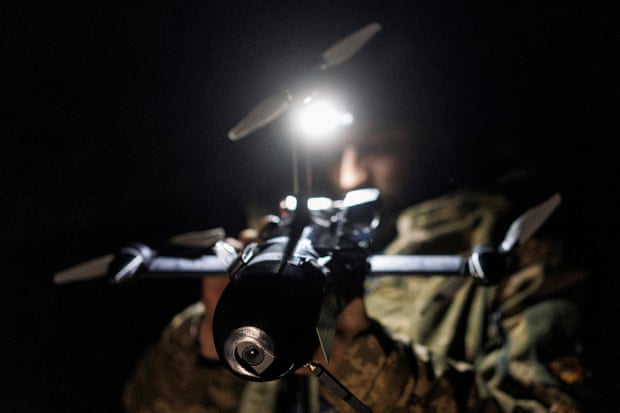
Geopolitical constraints further complicate cooperation. Ukraine does not officially recognize Taiwan, meaning most interaction occurs indirectly through countries such as Poland, the Czech Republic, and the United States. According to the report, there is limited formal intergovernmental coordination, with most cooperation taking place at the private sector level.
Nevertheless, as demand grows for AI-enabled drone systems, experts see potential for deeper collaboration between Ukraine and Taiwan. Taiwan’s Ministry of Economic Affairs has already pledged financial support of approximately 326 million New Taiwan dollars (around $10 million USD) to seven high-tech companies developing specialized UAV chips.
Ukrainian manufacturers stress that the key criterion in selecting suppliers is effectiveness on the battlefield. In the current context, decisions are driven not only by economic considerations, but primarily by the urgent need to sustain defense capabilities and secure military advantage.
Stay updated with the latest news Follow us on Google Subscribe
-
 28 SEP 2026 17:58
 -
 28 SEP 2026 17:25
 -
 28 SEP 2026 16:36
 -
 28 SEP 2026 15:52
 -
 28 SEP 2026 15:16
 -
 28 SEP 2026 14:49
 -
 28 SEP 2026 14:22
 -
 28 SEP 2026 13:58
 -
 28 SEP 2026 13:36