About
About Contact
AI race: What is China’s hidden advantage over the US?
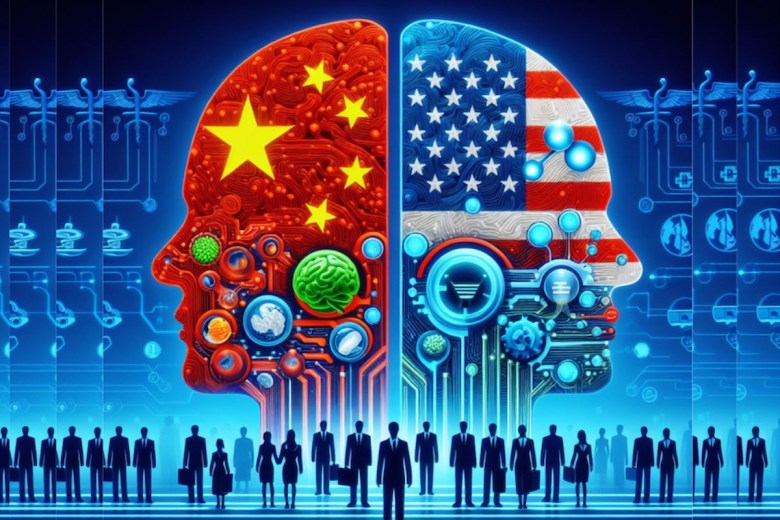


It is well known that intense competition is currently unfolding between several leading global powers, particularly the United States and China, in the rapidly expanding artificial intelligence technology market. As AI becomes increasingly central to economic growth, national security, scientific innovation, and technological leadership, both countries are investing enormous resources to strengthen their positions in the global race for dominance.
According to “Sabil.az,” the United States currently maintains an important advantage over China in the field of artificial intelligence, especially in terms of access to the world’s most advanced semiconductors and cutting-edge AI chips used for training sophisticated models.
However, while Washington remains ahead in chip technology, China possesses a major strategic advantage in another critical area — the ability to provide vast amounts of energy needed to power enormous AI-driven data centers.
This advantage is becoming increasingly important because modern artificial intelligence systems require huge computing infrastructures to train and operate advanced AI models. These large-scale data centers consume extraordinary amounts of electricity, making reliable and affordable energy supplies one of the key factors shaping the future of AI development.
According to the International Energy Agency (IEA), a standard data center can consume as much electricity as 100,000 households. Meanwhile, next-generation “hyperscale” facilities, designed specifically for artificial intelligence and cloud computing operations, may use energy equivalent to that consumed by as many as two million homes.
China’s access to abundant and relatively inexpensive electricity resources places the country in a highly favorable position to meet these enormous energy demands.
China already generates more than twice as much electricity as the United States, and analysts expect the gap to widen further in the coming years as Beijing continues to invest heavily in expanding and modernizing the national power grid.
Research company BloombergNEF estimates that over the next five years China will add six times more new electricity generation capacity than the United States.
A significant portion of this additional capacity is expected to come from renewable energy sources such as solar and wind power, sectors in which China has rapidly emerged as a global leader.
In 2025 alone, China added more than 430 gigawatts of wind and solar energy capacity. This represented more than half of all renewable energy capacity added worldwide during that year, highlighting the scale and speed of the country’s clean energy expansion.
One of the core elements of China’s artificial intelligence strategy is the integration of data centers with the country’s rapidly growing renewable energy sector.
As part of the government’s broader “Eastern Data, Western Computing” initiative, authorities are concentrating the construction of new data centers in China’s sparsely populated interior regions. Compared to the densely urbanized eastern coastline, these western areas offer more available land, lower operational costs, and significantly greater access to renewable energy resources.
Chinese officials believe this strategy will allow the country to create a more sustainable and energy-efficient AI infrastructure while also reducing pressure on heavily populated coastal provinces.
Earlier this month, Beijing announced the launch of the country’s first “large-scale” renewable energy project directly connected to a data center.
The project, located in the northwestern Ningxia region, combines 500 megawatts of wind and solar power generation and will provide electricity to a cloud data center operated by China Datang through a dedicated transmission line.
Experts say such projects could become increasingly common as China seeks to align its artificial intelligence ambitions with its long-term clean energy goals.
“A country that can provide cheap, stable, and low-carbon electricity over the long term will have a major advantage in AI infrastructure,” Qiyang Xiong, a doctoral researcher at Renmin University of China specializing in artificial intelligence and energy policy, told Al Jazeera.
According to Xiong, China is already a global leader in solar power, wind energy, and ultra-high-voltage electricity transmission technologies. These capabilities provide the country with a strong advantage in supplying large data center clusters in western China with substantial amounts of relatively low-cost and clean electricity.
At the same time, analysts note that the United States still remains the dominant global player in the data center industry.
According to Stanford University’s “AI Index” report, the United States had approximately 5,427 data centers in 2025, compared to 449 in China. This demonstrates the scale of America’s existing technological infrastructure and its continuing leadership in the AI ecosystem.
The IEA also estimates that of the 415 terawatt-hours of electricity consumed globally by data centers in 2024, 45 percent came from the United States. China and Europe accounted for 25 percent and 15 percent, respectively.
Financial investments in the sector also remain enormous.
According to forecasts by Morgan Stanley, Silicon Valley technology giants Amazon, Microsoft, Meta, and Alphabet alone are expected to spend approximately $630 billion on data centers and other AI-related projects in 2026. This figure significantly exceeds the planned spending of Chinese technology companies such as Alibaba, Tencent, and ByteDance.
Nevertheless, the gap between the two superpowers appears to be narrowing steadily as China accelerates the construction of new AI infrastructure and energy facilities across the country.
According to an analysis by Rystad Energy, China’s total data center capacity is projected to reach 60 gigawatts by 2030 — nearly double its current level. This would account for approximately 2.3 percent of the country’s total electricity demand.
As the global race for artificial intelligence leadership intensifies, experts increasingly believe that access not only to advanced chips, but also to large volumes of affordable and sustainable energy, could become one of the decisive factors shaping the balance of power in the AI era.
Stay updated with the latest news Follow us on Google Subscribe
-
 28 SEP 2026 17:58
 -
 28 SEP 2026 17:25
 -
 28 SEP 2026 16:36
 -
 28 SEP 2026 15:52
 -
 28 SEP 2026 15:16
 -
 28 SEP 2026 14:49
 -
 28 SEP 2026 14:22
 -
 28 SEP 2026 13:58
 -
 28 SEP 2026 13:36