Will India become a major buyer of Russian LNG?
21 April 2026 15:00   21 Apr 2026 15:57 Share

As Russia anticipates a full embargo on liquefied natural gas (LNG) supplies to Europe by 2027, it is actively seeking alternative markets. One of the potential destinations under consideration is India, and initial steps in this direction have already been taken, with the first LNG shipment dispatched from the Baltic Sea toward Indian shores.

According to “Stabil.az”, however, experts remain cautious about the long-term prospects of Russia establishing a strong position in the Indian market. Unlike China, which has significantly expanded its energy ties with Moscow, India is unlikely to become a comparable large-scale buyer. The primary concerns for Indian importers revolve around the risk of secondary sanctions and reluctance to accept higher prices.

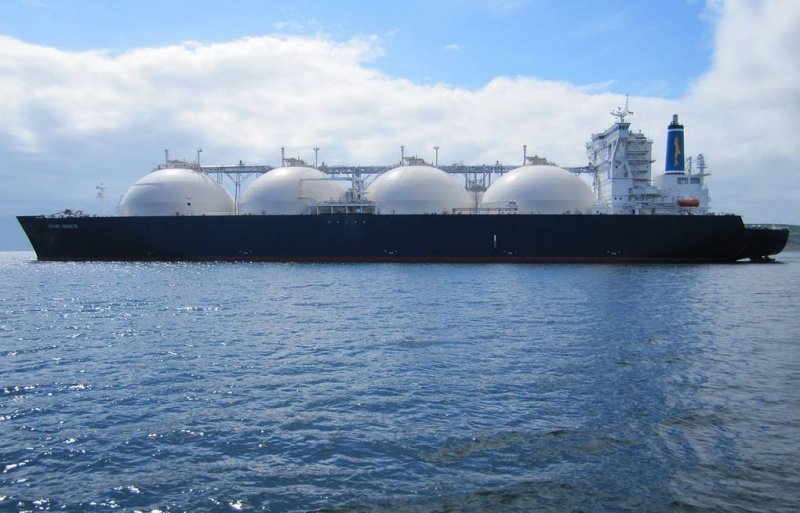
Recent developments highlight this tentative engagement. As reported by Forbes, the first cargo from the Gazprom LNG Portovaya plant was shipped to India. The tanker Kunpeng, with a capacity of 138,200 cubic meters, headed to the Dahej terminal on India’s western coast, operated by Petronet LNG, which is partially state-owned.

At the same time, Russia continues to expand shipments to China. LNG cargoes from Portovaya have also been delivered there, including shipments following US sanctions imposed on Gazprom in 2025. Another vessel, Valera, delivered gas to China’s Beixai terminal, while additional shipments from the Yamal LNG project are expected to resume.

News about -   Will India become a major buyer of Russian LNG?

According to official Russian statistics, the country produced 32.9 million tons of LNG in 2025, exporting approximately 31.3 million tons. Of this, 13.8 million tons went to the European Union, 9.79 million tons to China, and 5.8 million tons to Japan.

Russia’s LNG production is concentrated in a handful of major projects. The largest is Yamal LNG, with an annual capacity of 17.4 million tons. It is followed by Sakhalin-2, which produces 9.6 million tons annually. These projects have largely avoided sanctions. In contrast, Arctic LNG 2—a flagship project intended to become Russia’s largest—has faced delays due to US sanctions, affecting its expansion timeline.

Additional facilities, including the Portovaya plant and the Kriogaz-Vysotsk project, have also been impacted by sanctions. The latter has suspended operations, while Portovaya has had to adjust its logistics, including rerouting shipments and relocating operations to maintain exports.

Experts view the initial LNG shipment to India as a test case. Critical uncertainties remain regarding payment mechanisms, logistics, and the potential application of secondary sanctions. For India to significantly increase imports, Russian LNG would likely need to be offered at a substantial discount to offset these risks.

Russia’s broader strategy is to redirect LNG exports toward countries it considers friendly, including China, India, Thailand, and the Philippines. However, this shift faces three key challenges: sanctions pressure, logistical constraints, and pricing mismatches. Transporting LNG to new markets often requires longer routes and higher costs, necessitating additional investment.

News about -   Will India become a major buyer of Russian LNG?

India represents a particularly attractive but challenging market. Currently, about 67% of its LNG imports come from suppliers such as Qatar, the UAE, and Oman. While diversification is appealing, India remains highly sensitive to sanctions risks and price competitiveness. Analysts note that India’s preferred price range—around $5–6 per MMBtu—falls well below Russia’s profitable threshold of $8–10 per MMBtu. Meanwhile, average spot prices in Asia in 2025 exceeded $12, complicating negotiations further.

Beyond India, Southeast and South Asia offer additional opportunities for Russian LNG exports. Countries such as Thailand, Malaysia, Indonesia, Singapore, Vietnam, the Philippines, and Myanmar are considered promising. However, these markets also present challenges. Infrastructure limitations, particularly in the Philippines, and the growing adoption of renewable energy in some countries reduce demand for gas. Additionally, many states remain cautious due to geopolitical considerations and the risk of US sanctions.

In conclusion, while Russian LNG is gradually entering Asian markets, including India, its expansion is likely to be slow and measured. The combination of political risks, logistical complexities, and economic constraints suggests that any foothold in India will depend on careful balancing and will likely rely on cautious, short-term agreements rather than large-scale, long-term commitments.


Stabil.Az 

Stay updated with the latest news Follow us on Google Subscribe