Why gold prices remain steady amid Middle East war
26 March 2026 12:09   26 Mar 2026 18:52 Share

The war initiated by the United States and Israel against Iran has entered its 26th day. Despite persistent tensions and uncertainty in global financial markets, gold prices have shown an unexpected level of stability.

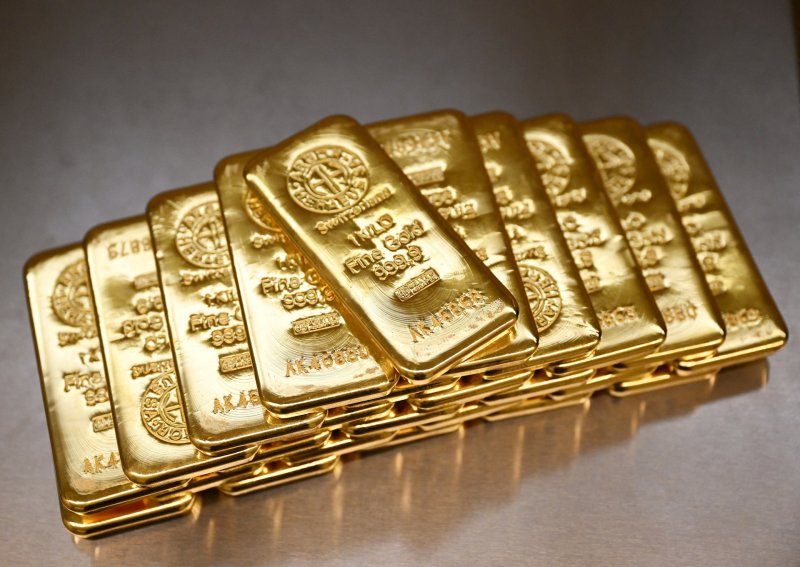
According to “Stabil.az,” gold has hovered around $5,000 per ounce worldwide in recent days.

This stability raises an important question: is it unusual for gold prices to remain steady during periods of heightened global uncertainty and conflict?

The answer is yes. Typically, gold prices surge during economic turmoil, as investors turn to it as a safe-haven asset to safeguard their wealth. This pattern is especially pronounced during times of war.

For instance, when Russia launched its large-scale offensive against Ukraine in February 2022, gold prices rose significantly. Remi Bourgeois, an economist at the French Institute for International and Strategic Studies in Paris and founder of the Epistelem analytical platform, told Al Jazeera that Western sanctions on Russia triggered a “wave of panic” among central banks and reshaped gold market dynamics. Countries such as China began purchasing gold in record volumes to reduce reliance on the US dollar. However, the current conflict involving the US, Israel, and Iran has not prompted a similar reaction.

So why has gold remained stable?

James Midway, a former economic adviser to the UK’s shadow chancellor and now a board member of the Progressive Economy Forum, explained that traders anticipate the US Federal Reserve may halt interest rate cuts or even raise rates in response to inflationary pressures.

“This makes dollar-denominated assets more attractive, while gold, which does not yield interest, becomes less appealing,” Midway noted. He added that markets had long expected rate cuts, which have yet to materialize.

Another contributing factor is gold’s strong performance earlier this year.

“Gold has already seen substantial gains, making it less responsive to geopolitical tensions now,” Midway said.

Rebecca Christie, a senior fellow at the Bruegel think tank, echoed this view, pointing out that gold is currently trading well above its historical averages.

“There are additional dynamics at play, including a stronger US dollar. Since gold is priced in dollars, this can limit further price increases,” Christie explained.

Experts caution that predicting gold prices remains challenging amid ongoing uncertainty in the Middle East.

“The primary reason gold is not rising further is that it is already highly priced,” Christie emphasized.

According to Midway, two key developments could trigger significant movement in gold prices: “First, a clear signal from the Federal Reserve indicating that interest rates may be lowered despite inflation concerns. Second, a shift in expectations regarding the duration of the conflict. At present, there is some belief that it may conclude relatively soon, but if it drags on and the impact widens, gold is likely to become more attractive to investors.”


Stabil.Az 

Stay updated with the latest news Follow us on Google Subscribe