About
About Contact
What drives the OpenAI–Anthropic rivalry?


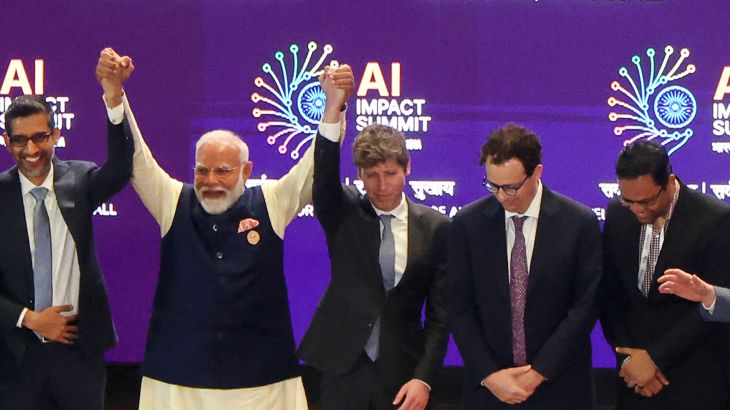
At a recent AI summit in New Delhi, a brief moment during a photo opportunity with Indian Prime Minister Narendra Modi quickly went viral. Cameras captured Sam Altman and Dario Amodei standing side by side — but noticeably avoiding physical contact.
Social media users were quick to interpret the gesture as a symbol of the intensifying rivalry between the two most closely watched companies in generative AI.
While the viral clip may have been fleeting, the competition it symbolized is anything but superficial.
A rivalry rooted in shared origins
Anthropic’s story begins inside OpenAI itself. Founded in 2021 by former OpenAI researchers, including Dario Amodei, the company emerged from internal debates about the pace and direction of artificial intelligence development.
OpenAI, established in 2015 by Sam Altman, Elon Musk and other tech leaders, began as a nonprofit initiative with an ambitious mission: to build artificial general intelligence (AGI) that benefits humanity. Over time, however, OpenAI transitioned into a hybrid capped-profit structure and entered into a multibillion-dollar strategic partnership with Microsoft.
For some researchers, this shift toward commercialization raised concerns. Anthropic’s founders believed that rapid scaling and market pressure could compromise long-term safety priorities. Their departure reflected not only professional differences but a deeper philosophical divide about how powerful AI systems should be developed and deployed.
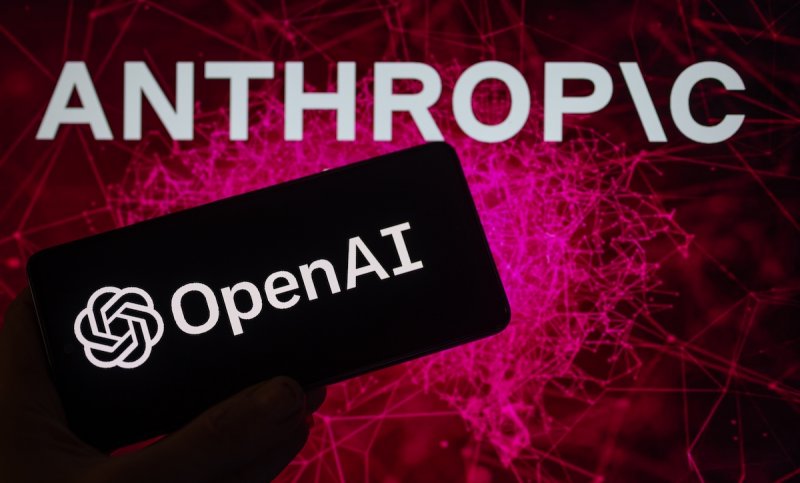
Speed vs. safety: Two strategic models
At the heart of the OpenAI–Anthropic rivalry lies a fundamental strategic contrast.
OpenAI chose a rapid deployment model. The launch of ChatGPT brought advanced AI tools into the hands of hundreds of millions of users worldwide, transforming AI from a research laboratory project into a mainstream consumer product. Iterative releases, frequent updates, and real-world feedback became central to its strategy.
Anthropic adopted a more cautious approach. Its flagship model, Claude, was built using what the company calls “Constitutional AI” — a framework that embeds predefined ethical principles into the training process, enabling the model to self-regulate according to safety guidelines. Rather than emphasizing speed to market, Anthropic has focused on alignment research and controlled deployment.
In simplified terms:
-
OpenAI prioritizes rapid iteration and large-scale deployment.
-
Anthropic prioritizes alignment research and risk mitigation before expansion.
This difference is not merely tactical — it reflects contrasting visions of how humanity should handle transformative technologies.
The corporate giants behind the curtain
The rivalry is also shaped by the strategic alliances each company maintains.
OpenAI’s closest partner is Microsoft, which has invested billions of dollars and integrated OpenAI’s models into Azure cloud services and enterprise software products. This relationship provides OpenAI with vast computing resources and global distribution channels.
Anthropic, meanwhile, has secured major backing from Google and Amazon. Through Amazon Web Services (AWS), Anthropic’s models are being distributed widely via cloud infrastructure.
In effect, the OpenAI–Anthropic rivalry mirrors a broader contest between Microsoft on one side and Google/Amazon on the other — a high-stakes struggle for dominance in next-generation AI infrastructure.
Beyond business: A strategic global contest
This competition now extends beyond Silicon Valley boardrooms.
Artificial intelligence has become a matter of national security, economic productivity, military innovation, and geopolitical influence. The United States government sees leadership in AI as a strategic priority, and companies like OpenAI and Anthropic increasingly operate at the intersection of private innovation and national interest.
At the same time, the European Union and other jurisdictions are advancing regulatory frameworks aimed at governing AI development. Decisions made by OpenAI and Anthropic — particularly regarding transparency, risk management, and deployment speed — will influence how international AI governance standards evolve.

A healthy competition — or a dangerous race?
From one perspective, this rivalry benefits the industry. Competition drives:
-
Higher safety standards
-
Greater transparency
-
Faster innovation
-
Improved products for users
However, the risks are equally real. If competitive pressure accelerates deployment without adequate safeguards, vulnerabilities could multiply. Large language models are already shaping public discourse, education, corporate decision-making, and national security systems.
The ultimate question is not which company gains more market share — it is what trajectory artificial intelligence should follow.
OpenAI represents a vision in which real-world deployment and iterative learning drive progress. Anthropic represents a model in which safety, alignment, and controlled scaling take precedence. Both approaches seek to shape the future of AI, but they prioritize different pathways.
More than a viral moment
The viral image from New Delhi may have captured public attention, but the deeper reality is philosophical rather than personal. The tension between OpenAI and Anthropic reflects an ongoing debate about innovation versus caution, commercialization versus containment, and speed versus responsibility.
The outcome of this rivalry may help determine not only the direction of the AI industry, but the ethical and regulatory framework governing one of the most transformative technologies in human history.
If competition remains constructive, it could lead to safer, more capable AI systems. If it becomes a race defined solely by dominance and scale, the consequences may be harder to control.
In that sense, the “distance” between Altman and Amodei is less about optics — and more about two competing answers to one profound question: How should humanity build intelligence greater than its own?
Stay updated with the latest news Follow us on Google Subscribe
-
 28 SEP 2026 17:58
 -
 28 SEP 2026 17:25
 -
 28 SEP 2026 16:36
 -
 28 SEP 2026 15:52
 -
 28 SEP 2026 15:16
 -
 28 SEP 2026 14:49
 -
 28 SEP 2026 14:22
 -
 28 SEP 2026 13:58
 -
 28 SEP 2026 13:36