Mexico is on edge after the killing of cartel leader El Mencho
24 February 2026 12:48   24 Feb 2026 12:57 Share

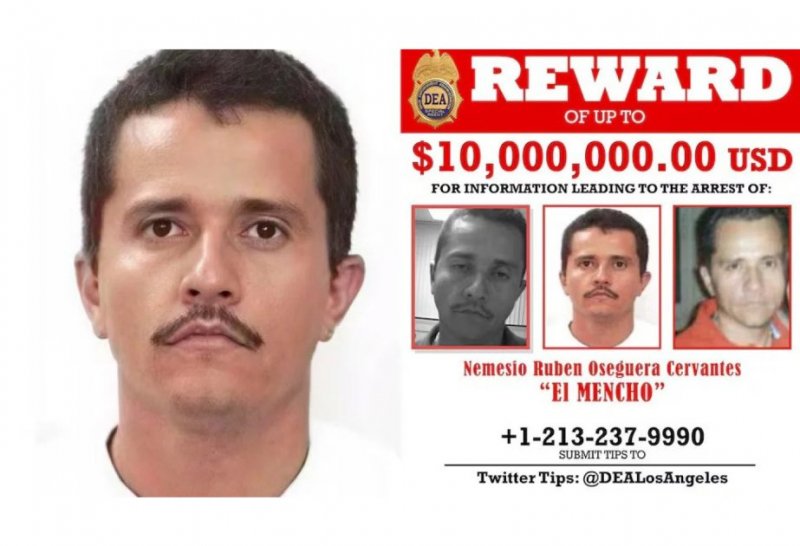
The death of Nemesio Rubén Oseguera Cervantes — widely known as “El Mencho” — has sent shockwaves through Mexico and beyond, triggering a wave of violence and renewed concerns about security across the country.

Oseguera Cervantes was the leader of the powerful Jalisco New Generation Cartel (CJNG), one of Mexico’s most violent and fastest-growing criminal groups. His killing during a military operation in Jalisco state has prompted unrest in multiple regions and led several countries to issue travel warnings for their citizens.

In response to the deteriorating security situation, Azerbaijan’s embassy in Mexico City urged Azerbaijani citizens to remain vigilant, avoid large gatherings and high-risk areas, and rely only on official information sources.

A three-decade criminal career

Born in Michoacán, Oseguera Cervantes built a criminal career that spanned more than 30 years. In 1994, he was convicted in the United States for heroin trafficking and sentenced to three years in prison. After serving his sentence and returning to Mexico, he rose rapidly within the country’s evolving drug trade.

Around 2009, he founded the Jalisco New Generation Cartel. Under his leadership, the CJNG expanded aggressively, becoming a dominant force in Mexico’s criminal landscape. The cartel smuggled cocaine, methamphetamine, fentanyl, and migrants into the United States, while also diversifying into fuel theft, extortion, and financial scams.

News about -   Mexico is on edge after the killing of cartel leader El Mencho

The group became notorious for its militarized tactics. It used drones and improvised explosive devices and carried out direct attacks on Mexican security forces. Among the most high-profile incidents was the 2015 shooting down of a Mexican military helicopter in Jalisco state and a failed assassination attempt on Omar García Harfuch, who currently serves as Mexico’s federal security secretary.

Oseguera Cervantes faced multiple indictments in the United States, including in the U.S. District Court for the District of Columbia. He was also charged in Chicago with murder and large-scale money laundering. In recent years, the U.S. government had placed a $15 million bounty on his capture.

In February 2025, the administration of U.S. President Donald Trump designated the CJNG as a foreign terrorist organization, further escalating international pressure on the cartel.

The operation that killed “El Mencho”

Oseguera Cervantes was killed on February 22 during a military raid in the Tapalpa region of Jalisco, roughly two hours from Guadalajara.

According to Mexico’s Defense Ministry, the operation involved special forces and the Mexican Air Force. During the confrontation, federal forces killed four cartel members and wounded three others, including Oseguera Cervantes. He reportedly died while being airlifted to Mexico City for treatment.

Three soldiers were injured in the operation, and two individuals were detained.

White House press secretary Caroline Leavitt confirmed that the United States provided intelligence support for the raid, praising cooperation between U.S. and Mexican authorities.

Immediate aftermath: Violence and roadblocks

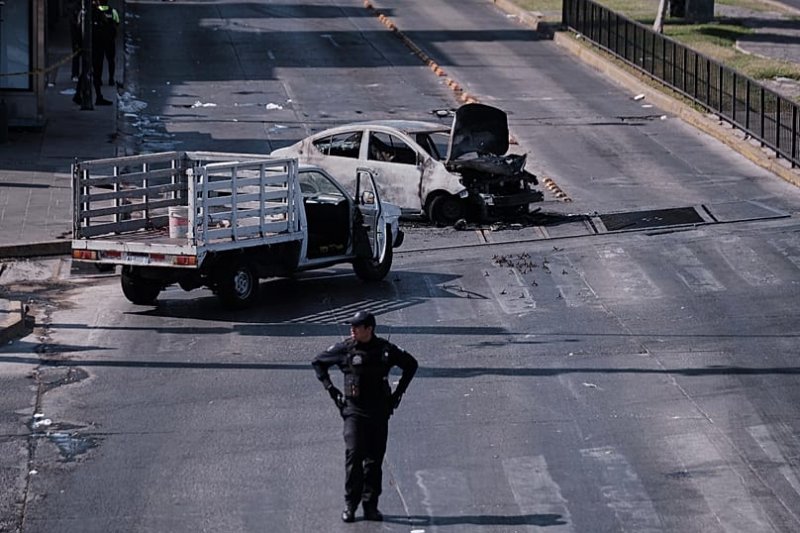
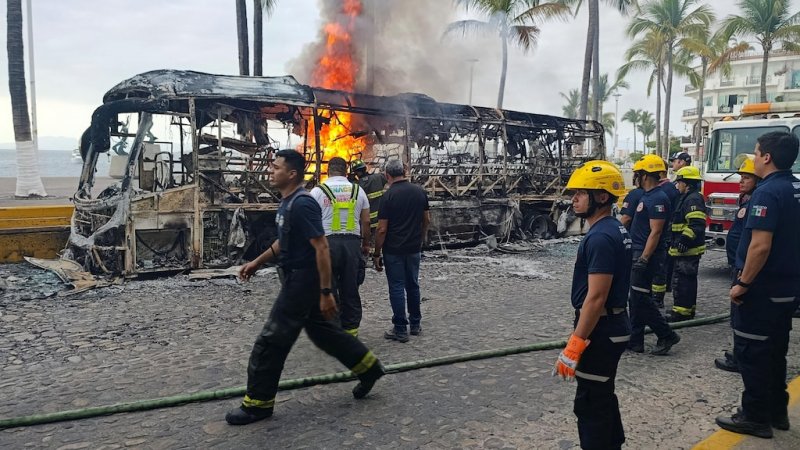
The cartel leader’s death triggered swift retaliation. Armed individuals set vehicles ablaze and blocked highways across 20 Mexican states. In Guadalajara — Mexico’s second-largest city and the capital of Jalisco — residents were urged to remain indoors. Schools canceled classes, flights were disrupted, and taxi applications were temporarily suspended in some areas.

More than 250 roadblocks were reportedly established nationwide.

Mexican President Claudia Sheinbaum called for calm, later announcing that most of the roadblocks had been removed. However, security forces across the country remain on high alert.

News about -   Mexico is on edge after the killing of cartel leader El Mencho

What happens next?

The CJNG operates in at least 21 Mexican states and maintains networks that reach into nearly every region of the United States. While the death of “El Mencho” represents a major blow to the organization, analysts warn that such groups often survive leadership losses through rapid internal succession.

Uncertainty now surrounds who will replace Oseguera Cervantes and whether rival factions within the cartel could trigger further instability. Historically, the killing or capture of major cartel leaders has sometimes led to fragmentation, internal power struggles, and spikes in violence.

Given the CJNG’s transnational reach — including drug trafficking routes into the United States and financial operations across borders — the consequences of this development are likely to extend beyond Mexico.

For now, Mexico faces a tense period of transition as authorities attempt to prevent further unrest and dismantle one of the most powerful criminal organizations in the Western Hemisphere.


Stabil.Az 

Stay updated with the latest news Follow us on Google Subscribe