About
About Contact
Energy, trade, and security: What Putin’s China visit achieved
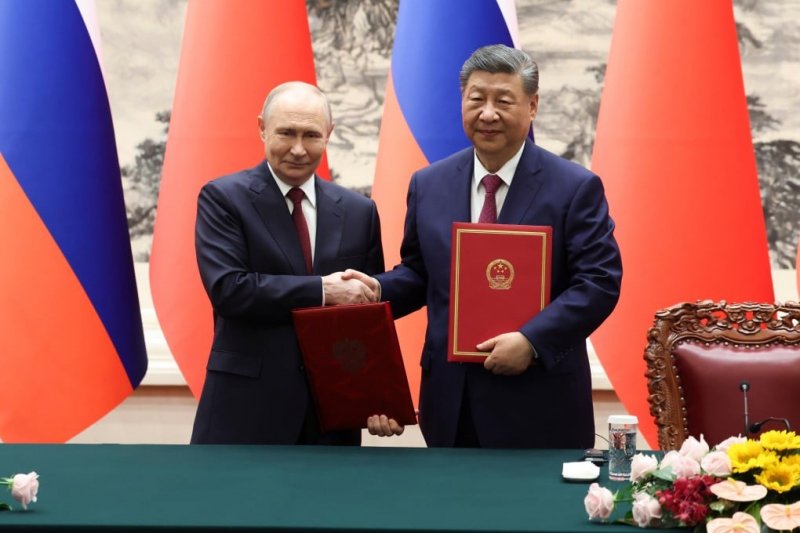


As is known, Russian President Vladimir Putin paid a two-day working visit to China on May 19. On May 20, he held talks with Chinese President Xi Jinping, and a ceremony for the signing of joint documents was held at the National People’s Congress.
What details did the Russian leader’s visit to China leave us with?
“Stabil.az” presents the details of Putin’s visit to Beijing and the topics discussed:
Energy
First of all, it should be noted that during the visit, the Russian President stated that, against the backdrop of the crisis in the Middle East, Russia remains a reliable supplier of resources, while China continues to play the role of a responsible consumer of these resources. Vladimir Putin said that the two countries are actively developing cooperation in the energy sector, with Russia remaining one of the largest exporters of oil, natural gas (including liquefied natural gas), and coal to China.
Earlier, Putin’s aide Yuri Ushakov reported that oil supplies to China increased by 35%, reaching 31 million tons in the first quarter of 2026. In monetary terms, Russia’s oil exports to China rose by 8.8% to $14.4 billion.
Rosatom is currently completing the construction of power units at the Tianwan Nuclear Power Plant and the Xudapu Nuclear Power Plant in China. The Russian head of state also added that the parties are considering mutual recognition of Russian and Chinese environmental certificates for electricity generation. “A corresponding memorandum was signed as part of our visit,” he noted.
In addition, the two sides are discussing the expansion of cooperation in the field of metals and rare elements, which are critical for the development of green technologies.
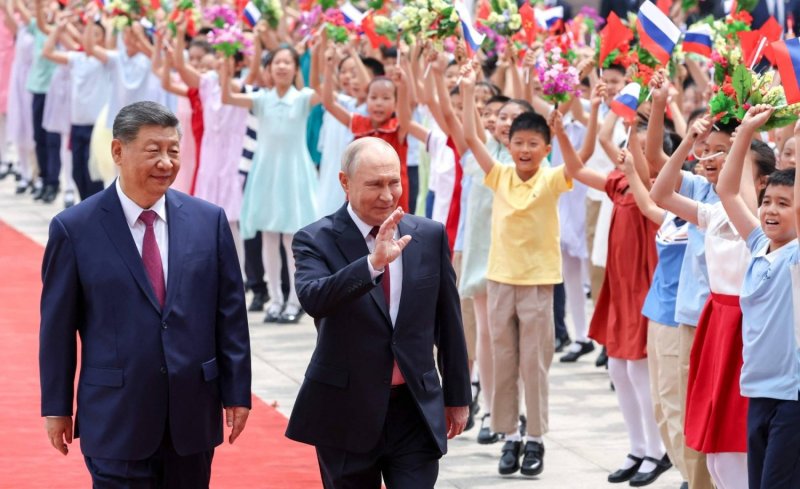
Economy
In 2025, the trade turnover between Russia and China reached almost $240 billion. At the same time, the structure of trade has expanded, including through high value-added goods. The Russian President emphasized that the growth in trade turnover between the two countries is ensured by modern enterprises.
He concluded by noting that almost all Russia–China export-import operations are now carried out in rubles and yuan. “We have built a stable mutual trade system, protected from external influences and negative trends in global markets,” the Russian leader emphasized.
Visa-free regime
Moscow and Beijing will continue their mutual visa-free regime practice. Chinese Foreign Ministry spokesperson Guo Jiakun stated that China will extend the visa-free regime for Russian citizens until December 31, 2027. The current agreement remains valid until September 14, 2026.
The decision was made to further facilitate humanitarian exchanges between the two countries. It was noted that Russian citizens holding foreign passports will be able to enter China for up to 30 days without a visa for business trips, tourism, visiting relatives and friends, exchange visits, or transit purposes.
“The Chinese side is ready to continue joint efforts with the Russian side to improve the convenience of mutual travel for citizens of both countries,” the diplomat noted.
Arms control
Russia and China reaffirmed their support for an international arms control system, with the United Nations playing a central role. Moscow and Beijing called on nuclear-weapon states and their allies without nuclear weapons to abandon destabilizing concepts such as “joint nuclear missions,” as well as “enhanced” and “forward-deployed” nuclear deterrence strategies.
The parties also urged Japan to fully fulfill its obligations to destroy chemical weapons it abandoned in China.
Fight against crime and terrorism
Russia and China intend to jointly combat drug trafficking, arms trafficking, cybercrime, transnational organized crime, corruption, and illegal migration. The two sides also agreed to continue cooperation in combating money laundering and terrorist financing through the exchange of information between financial intelligence agencies.
Special attention will be given to raising awareness among young people about the risks associated with financial crimes.
Humanitarian cooperation
Russia and China are launching new large-scale interstate humanitarian projects, including the Russia–China Educational Year. The program includes conferences, seminars, concerts, exhibitions, master classes, as well as Olympiads and competitions.
The two countries are also expected to continue active cooperation in the field of sports.
Stay updated with the latest news Follow us on Google Subscribe
-
 28 SEP 2026 17:58
 -
 28 SEP 2026 17:25
 -
 28 SEP 2026 16:36
 -
 28 SEP 2026 15:52
 -
 28 SEP 2026 15:16
 -
 28 SEP 2026 14:49
 -
 28 SEP 2026 14:22
 -
 28 SEP 2026 13:58
 -
 28 SEP 2026 13:36