About
About Contact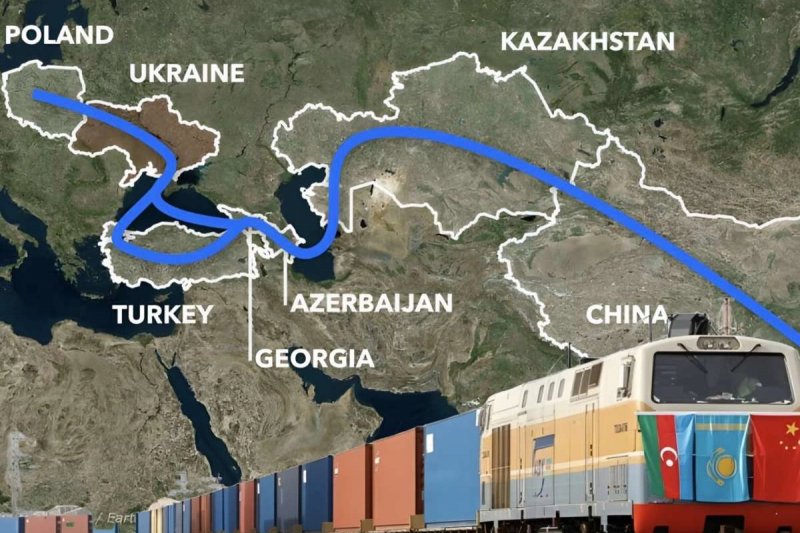


The Middle Corridor is gradually emerging as a key commercial bridge between Western China and Europe, offering an alternative to Russia’s Northern Corridor and the Suez Canal route. By integrating rail, road and maritime transport, the corridor provides a shorter and more efficient pathway for the movement of goods. Particularly since the outbreak of the Russia-Ukraine war, interest in TITR has grown substantially, positioning it as an attractive and reliable option for international trade flows.
The Trans-Caspian International Transport Route was formally established in February 2014 with the participation of relevant agencies from Azerbaijan, Kazakhstan and Georgia. In subsequent years, Ukraine, Romania and Poland joined the initiative, broadening its geographic and political scope. Today, the corridor begins at the China-Kazakhstan border and stretches westward through Kazakhstan, across the Caspian Sea, onward through Azerbaijan and Georgia, and into European markets.
The structure of the Middle Corridor reflects a high level of integration among regional transport networks, enhancing flexibility and efficiency. This interconnected system allows cargo to be rerouted in response to shifting demand, seasonal variations and evolving geopolitical circumstances. The route originates in China’s major industrial centers such as Xi’an, Chongqing and Urumqi, where goods are loaded onto freight trains bound for Central Asia. These shipments travel westward through Kazakhstan, utilizing an extensive railway network that links major transit hubs including Dostyk, Altynkol and Khorgos.
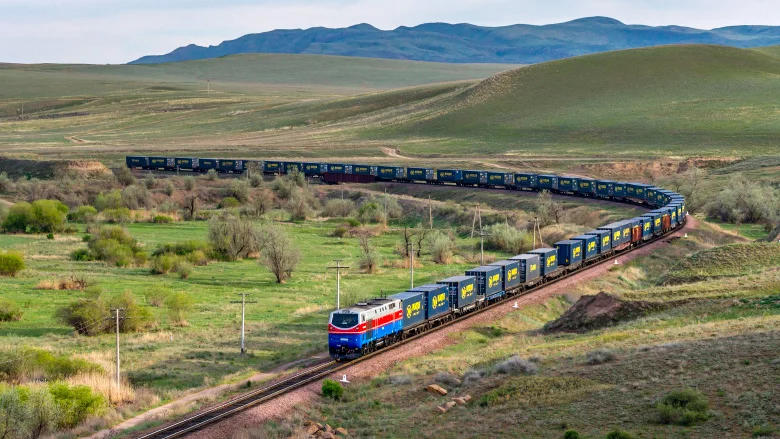
Upon reaching Kazakhstan’s Caspian Sea ports of Aktau and Kuryk, cargo is transferred onto vessels for shipment across the Caspian Sea. After arriving at Azerbaijan’s port of Alat, goods continue their journey by land toward European destinations.
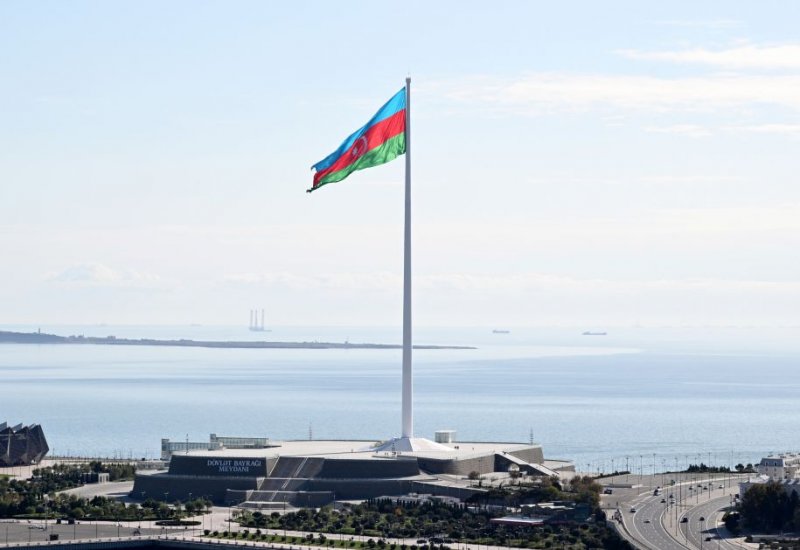
It is at this stage that Azerbaijan’s pivotal role within the Middle Corridor becomes particularly clear. The country’s advanced transport infrastructure, including the Baku International Sea Trade Port and the Baku-Tbilisi-Kars (BTK) railway line, ensures uninterrupted and efficient transit. The BTK railway, which connects Azerbaijan with Georgia and Turkey, serves as a critical link enabling the swift movement of goods to Turkey and further into European railway networks.
Originally designed to handle 6.5 million tons of cargo annually, the BTK railway’s capacity is projected to increase to 17 million tons by 2034. This planned expansion will significantly reinforce the logistical backbone of the Middle Corridor. Azerbaijan’s involvement goes beyond serving as a transit country; it acts as both an initiator and a coordinating force within the project, actively shaping its development and strategic direction.
The Middle Corridor also plays a vital role in Azerbaijan’s economic diversification strategy. By reducing reliance on energy exports and fostering the growth of the logistics and transport sectors, the corridor creates new revenue streams for the country. Transit fees, logistics services and the expansion of related industries contribute to strengthening the non-oil segment of the national economy.
Simultaneously, Azerbaijan’s geopolitical standing is being enhanced. Major global powers and international corporations increasingly regard the Middle Corridor as a stable and dependable trade route. Azerbaijan’s political stability, balanced foreign policy and track record as a reliable partner in international initiatives further boost confidence in the corridor’s long-term viability.
Strategically located at the crossroads of Europe and Asia, Azerbaijan serves as the central link of the Middle Corridor. Its geographic position, modern infrastructure and commitment to regional cooperation ensure the sustainable development of this transport network. As the corridor continues to expand, Azerbaijan’s integration into global trade systems will deepen, solidifying its position as one of the region’s leading logistics hubs.
The strategic value of the Middle Corridor is also reflected in its operational efficiency. Compared to the Northern Corridor, it shortens the trade distance between China and Europe by approximately 2,500 kilometers. Transit times range between 10 and 15 days, representing a significant improvement over traditional routes, which may take anywhere from 15 to 60 days. Moreover, by bypassing Russian territory, the corridor enhances supply chain stability and reduces exposure to geopolitical risks and trade restrictions.
In recent years, trade volumes along the Middle Corridor have grown rapidly, underscoring its increasing economic relevance. Rising cargo flows stimulate industrial activity, generate employment opportunities and drive infrastructure development in transit countries. As a result, participating states are strengthening their regional economies while securing more prominent positions within global supply chains.
Overall, the Middle Corridor is transforming into a strategic axis of Eurasian trade, with Azerbaijan positioned at its core. The continued expansion and modernization of this route will further elevate the country’s role in international commerce and reinforce its status as a critical connector between East and West.