About
About Contact
Azerbaijan Railways deepens cooperation with Chinese ports
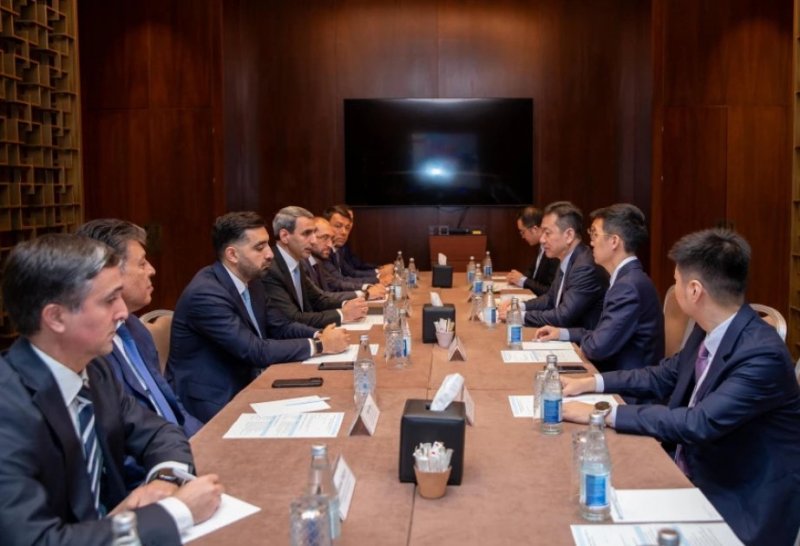


New opportunities to strengthen cooperation between Azerbaijan Railways (ADY) and Chinese partners in developing the Middle Corridor, increasing freight volumes, and expanding logistics capabilities were discussed during a series of meetings in Baku.
On the sidelines of the CICA Conference of Heads of Ports, ADY Chairman Rovshan Rustamov held meetings with representatives of leading Chinese port and technology companies.
The discussions focused on advancing Azerbaijan–China transport and logistics connectivity, increasing cargo flows along the Middle Corridor, and accelerating the digitalization of port and rail operations.
During a meeting with representatives of Shanghai International Port Group (SIPG) and technology company NIZE Tech, ADY Chairman discussed opportunities to expand regular container services along the Middle Corridor. The parties highlighted the importance of identifying cargo that could be transported from Shanghai to Europe via Kazakhstan, the Caspian Sea, and Azerbaijan, while exploring new areas for cooperation.
The meeting also addressed the digitalization of port operations and the deployment of smart-port solutions. Potential areas of cooperation included terminal operating systems, intelligent gate and cargo tallying solutions, yard management, data integration, and enhanced digital coordination between port and rail operations. The parties exchanged views on joint steps to further develop cooperation between ADY, SIPG, and NIZE Tech along the Middle Corridor.
ADY Chairman Rovshan Rustamov also met with a delegation from Lianyungang Port to discuss the development of the Lianyungang–Baku route, the expansion of block-train services along the Middle Corridor, and the attraction of additional cargo flows toward Europe.
The meeting highlighted the importance of the existing cooperation between ADY and Lianyungang Port and the new opportunities it creates. The parties noted that enhanced information exchange on cargo forecasts, train schedules, and logistics requirements would improve the efficiency of the Lianyungang–Baku route, help optimize transit times, and strengthen its competitiveness.
Following the meetings, the parties agreed to continue cooperation on the development of the Middle Corridor, increasing China–Azerbaijan–Europe cargo flows, optimizing logistics processes, and deploying new technological solutions.
Stay updated with the latest news Follow us on Google Subscribe
-
 28 SEP 2026 17:58
 -
 28 SEP 2026 17:25
 -
 28 SEP 2026 16:36
 -
 28 SEP 2026 15:52
 -
 28 SEP 2026 15:16
 -
 28 SEP 2026 14:49
 -
 28 SEP 2026 14:22
 -
 28 SEP 2026 13:58
 -
 28 SEP 2026 13:36