About
About Contact
Azerbaijan–China: From cooperation to strategic alignment
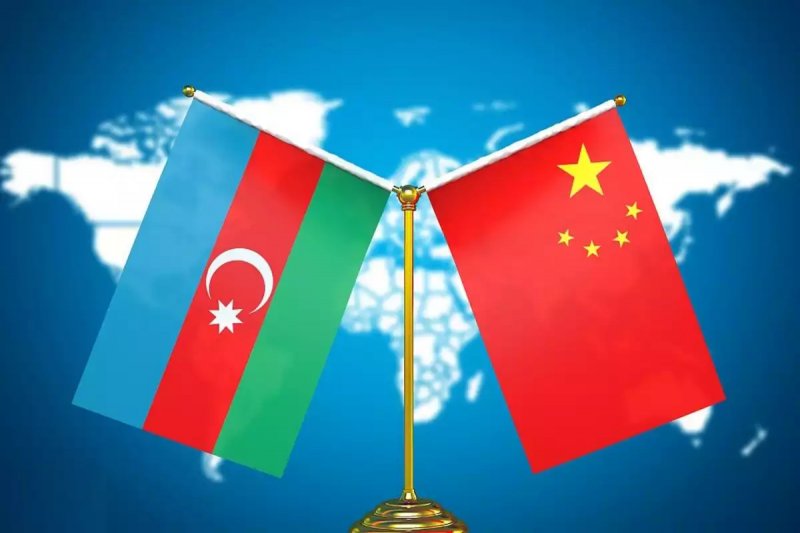


Relations between Azerbaijan and China have entered a phase of dynamic and accelerated development in recent decades, producing notable results across political, economic, and cultural spheres. These ties are significant not only within the framework of bilateral cooperation, but also in the broader context of regional and global initiatives. In particular, Azerbaijan’s geostrategic position, combined with China’s expansive global economic vision, creates favorable conditions for the continued deepening of this partnership.
Stabil.az recalls that diplomatic relations between the two countries were established in 1992, and April 2 marked the 34th anniversary of these ties. Since then, cooperation has been guided by principles of mutual respect, sovereignty, and non-interference in internal affairs.
Over time, relations have steadily strengthened, supported by high-level visits and a wide range of agreements across multiple sectors. Azerbaijan and China also maintain close coordination within international organizations, where they often support one another on key issues.
Economic cooperation stands as one of the central pillars of the relationship. China, as the world’s second-largest economy, has become one of Azerbaijan’s leading trading partners. Bilateral trade turnover continues to grow year by year, spanning diverse sectors, and this expanding exchange contributes positively to the economic development of both countries.
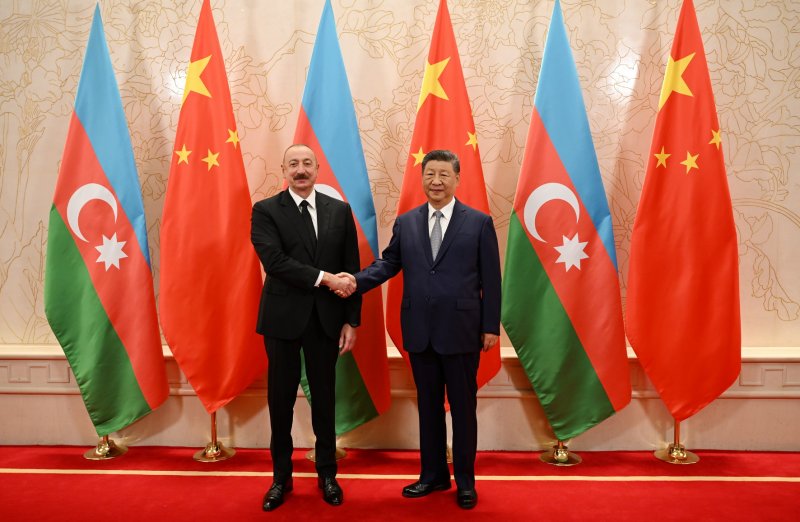
China’s “One Belt, One Road” initiative holds particular importance for Azerbaijan. Designed to revive the ancient Silk Road in a modern format, the initiative seeks to establish new transport and logistics corridors linking Europe and Asia. Azerbaijan plays a key role as a major transit country within this framework. Large-scale infrastructure projects such as the Baku–Tbilisi–Kars railway and the Baku International Sea Trade Port serve as tangible examples of this cooperation. Through these developments, Azerbaijan is strengthening its position as a crucial transport and logistics hub in the region.
Energy cooperation is another important dimension of the partnership. As a country rich in natural resources, Azerbaijan has the potential to contribute to China’s energy security. Chinese companies have shown growing interest in investing in Azerbaijan’s energy sector, and the scope for collaboration in this area remains significant. At the same time, both countries are exploring opportunities in renewable energy. China’s advanced technologies in this field offer valuable expertise, which Azerbaijan can leverage in its own energy transition efforts.
Cultural and humanitarian ties also play a meaningful role in strengthening bilateral relations. Educational cooperation continues to expand, with increasing numbers of Azerbaijani students pursuing studies at Chinese universities. At the same time, interest in Chinese language and culture is growing in Azerbaijan. Various cultural initiatives and exchanges are contributing to deeper mutual understanding and stronger people-to-people connections.

Tourism has also seen noticeable growth in recent years. The number of Chinese visitors traveling to Azerbaijan has increased, while Azerbaijani tourists are showing rising interest in visiting China. Simplified visa procedures have further facilitated this trend, supporting not only economic activity but also cultural exchange and interpersonal engagement.
Looking ahead, cooperation in technology and innovation represents one of the most promising areas for future development. China is widely recognized as a global leader in technological advancement, and Azerbaijan stands to benefit from this expertise as it advances its digital transformation agenda. Joint initiatives in areas such as smart cities, the digital economy, and artificial intelligence have the potential to deliver mutual benefits and elevate cooperation to a new level.
Overall, the strategically important and dynamically evolving relationship between Azerbaijan and China is expected to continue expanding and deepening in the years to come. By maintaining a partnership based on mutual benefit, both countries can achieve greater success not only at the regional level but also on the global stage. These relations create new opportunities across economic, political, and cultural domains, laying a strong foundation for long-term sustainable development.
Stay updated with the latest news Follow us on Google Subscribe
-
 28 SEP 2026 17:58
 -
 28 SEP 2026 17:25
 -
 28 SEP 2026 16:36
 -
 28 SEP 2026 15:52
 -
 28 SEP 2026 15:16
 -
 28 SEP 2026 14:49
 -
 28 SEP 2026 14:22
 -
 28 SEP 2026 13:58
 -
 28 SEP 2026 13:36