About
About Contact
Abu Dhabi talks mark new phase in Ukraine peace efforts
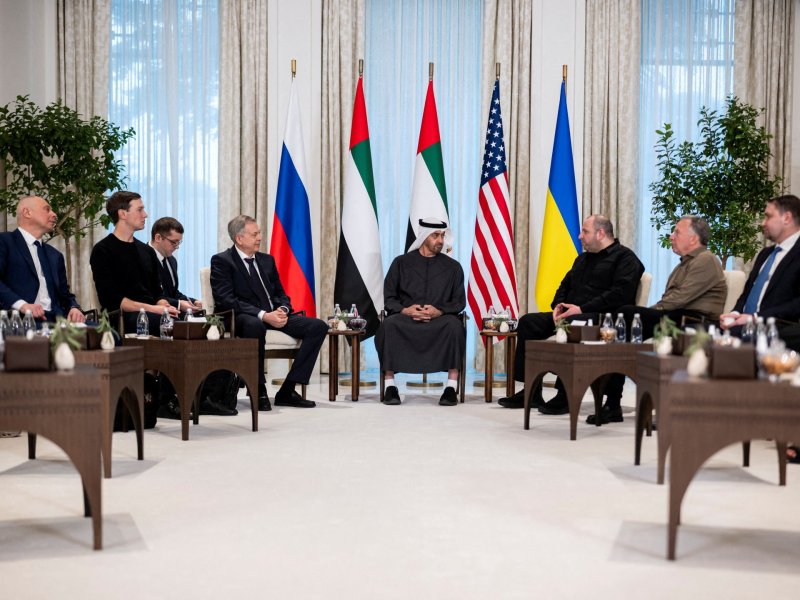


On January 23–24, trilateral talks were held in Abu Dhabi between delegations from Russia, Ukraine, and the United States, with the participation of representatives of the United Arab Emirates (UAE). Following the closed-door meeting, Moscow, Washington, and Kyiv gradually began to disclose limited details of the discussions. Despite differences in emphasis, all three sides shared a common assessment: the talks were described as constructive, and each party expressed readiness to continue the dialogue. At the same time, both Moscow and Kyiv indicated that the next round of consultations could take place as early as this week.
For observers closely following the course of the Russian-Ukrainian war, the key questions center on what issues were discussed during the trilateral meeting and what steps may follow.
According to Stabil.az, the meeting in the UAE featured direct discussions between the Russian and Ukrainian delegations on a peace plan that the United States has been promoting through shuttle diplomacy since late October 2025.
The talks were held at the closed diplomatic residence of Qasr al-Shati, a highly secure facility not shown on public maps and typically reserved for meetings of exceptional importance.
The Russian delegation was led by Chief of the General Staff Admiral Igor Kostyukov and included representatives from the Russian Ministry of Defense. Although Moscow did not officially disclose the full list of participants, the meeting was also attended by Kirill Dmitriyev, the Russian President’s special representative for investment and economic cooperation with foreign countries.
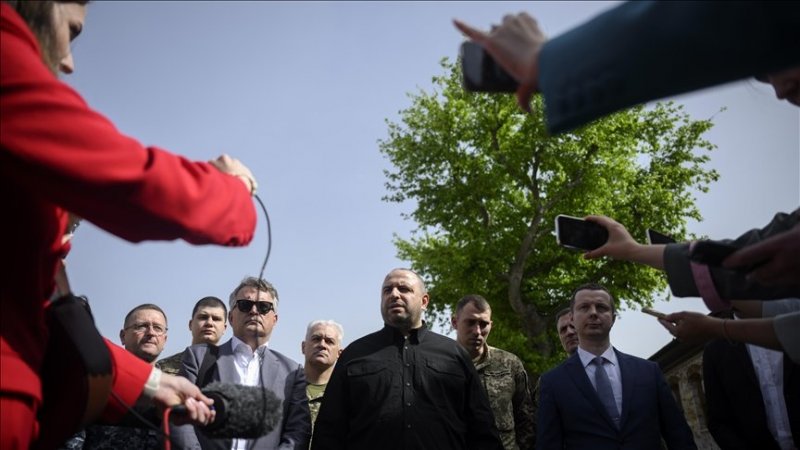
The composition of the Ukrainian delegation was approved by a decree of President Volodymyr Zelensky. The delegation consisted of ten members, led by Secretary of the National Security and Defense Council Rustem Umerov. Other participants included Head of the Presidential Administration Kirill Budanov, leader of the Servant of the People faction in the Verkhovna Rada David Arakhamia, First Deputy Head of the Presidential Administration Sergey Kislyta, Chief of the General Staff of the Armed Forces of Ukraine Andriy Gnatov, Chief of the Main Intelligence Directorate Oleg Ivashchenko and his deputy Vadim Skibitsky, as well as Presidential Administration advisor on economic affairs Alexander Bevz.
The United States was represented by President Donald Trump’s special envoy Stephen Witkoff, Trump’s son-in-law and unofficial representative Jared Kushner, and several other officials.
On January 22, one day prior to the trilateral talks, Witkoff and Kushner met with the Ukrainian delegation in Davos. Later that evening, they traveled to Moscow, where they held talks with Russian President Vladimir Putin.
According to photos and videos released from the venue, negotiations took place across several halls. A Ukrainian source cited by The Associated Press noted that the format of the talks varied: at times, all participants met together, while at other moments delegations were separated for focused discussions. Anonymous US officials told Axios that following the plenary session, the talks shifted into working groups, with American representatives moving between rooms to coordinate the negotiations.
Although the official agenda and final outcomes of the meeting were not publicly disclosed, media outlets in both Russia and Ukraine published partial details citing unnamed sources.
According to RBK-Ukraine, the Russian side demanded that Kyiv withdraw Ukrainian Armed Forces from parts of Donbas not under Ukrainian control. While Ukraine reportedly rejected this demand, it nevertheless agreed to discuss territorial issues based on the current line of contact.
The most sensitive and problematic dimension of the peace process remains the status of Crimea, the self-proclaimed Donetsk and Luhansk “People’s Republics,” as well as the Zaporizhzhia and Kherson regions. These territories are listed in the Russian Constitution as subjects of the Russian Federation, while Kyiv regards any recognition of their loss as a fundamental “red line.”
US envoy Stephen Witkoff described the talks as “very constructive” and confirmed that the parties had agreed to continue discussions in Abu Dhabi.
According to Axios sources, negotiators did not avoid difficult topics, including the future status of Donbas, the Zaporizhzhia Nuclear Power Plant, and potential mutual de-escalation measures.
A US official told Reuters that the delegations were able to discuss issues “down to the smallest detail” and expressed hope that the next meeting could bring the agreement closer to its final stage.
Sources cited by Politico also offered a positive assessment of the talks, noting that both sides are beginning to articulate what they could gain from a peace settlement. For Ukraine, this includes prospects for recovery and long-term economic development; for Russia, the potential resumption of business and economic engagement with the United States. US officials emphasized that a substantial portion of the discussions focused on economic issues, as well as governance and control of the Zaporizhzhia Nuclear Power Plant. Moscow reportedly supported the idea of sharing the electricity generated by the facility between Russia and Ukraine.
Overall, based on statements from all parties involved, the Abu Dhabi meeting can be characterized as constructive and forward-looking. If this momentum is maintained, the positive tone established in the UAE is likely to carry over into the next round of negotiations.
Stay updated with the latest news Follow us on Google Subscribe
-
 28 SEP 2026 17:58
 -
 28 SEP 2026 17:25
 -
 28 SEP 2026 16:36
 -
 28 SEP 2026 15:52
 -
 28 SEP 2026 15:16
 -
 28 SEP 2026 14:49
 -
 28 SEP 2026 14:22
 -
 28 SEP 2026 13:58
 -
 28 SEP 2026 13:36